
Your ExitMap Blog gathers contributions from top exit planning professionals across the country that are indexed into four categories. They include select strategies for planning your exit, ideas for building your company’s value, transfer options you can choose from, or preparing to enjoy your post-exit lifestyle. This page shows the most recent posts from Your ExitMap Blog. If you are seeking a qualified exit planning professional, you can view a map of specialists here.
All articles are copyrighted by the authors, and reprinted here with permission. Each author’s contact information is available via a link at the end of the article.
Most Recent Your ExitMap Blog Articles
Most Recent Blog Articles
What is the Right Price? Of all the misconceptions by business owners, the ones surrounding their company’s value are both the most common and often wildly inaccurate. I’ve been working for the last couple of months on the training videos for advisors in our new product, The ExitMap®. (You can take the assessment for free at www.myexitmap.com). In one session, we role-play a vignette about a financial planner discussing the value of a business with a client planning retirement. Part of it goes something like this. Q: “So Bob, how much do you expect to realize from your business when you sell it?” A: “I’ve heard from my accountant that most small businesses sell ... Read more Of all the misconceptions by business owners, the ones surrounding their company’s value are both the most common and often wildly inaccurate. I’ve been working for the last couple of months on the training videos for advisors in our new product, The ExitMap®. (You can take the assessment for free at www.myexitmap.com). In one session, we role-play a vignette about a financial planner discussing the value of a business with a client planning retirement. Part of it goes something like this. Q: “So Bob, how much do you expect to realize from your business when you sell it?” A: “I’ve heard from my accountant that most small businesses sell ... Read more The 7 Deadly Sins of an Entrepreneur -- Reprise I make no claim that using the Seven Deadly Sins as a metaphor for business behavior is original. Of course, the original concept is a codifying of “undesirable” human behaviors, or sins. The work probably comes from the Latin word sons (guilty). Various sources attribute it to Old English and Hebrew, but since Latin was the language of the church, this seems most likely. The concept of personifying the seven sins for popular consumption, as I mentioned in the first column in this series, goes back at least to Dante in the early 1300’s. It’s been used regularly in popular fiction including Roald Dahl’s Charlie ... Read more I make no claim that using the Seven Deadly Sins as a metaphor for business behavior is original. Of course, the original concept is a codifying of “undesirable” human behaviors, or sins. The work probably comes from the Latin word sons (guilty). Various sources attribute it to Old English and Hebrew, but since Latin was the language of the church, this seems most likely. The concept of personifying the seven sins for popular consumption, as I mentioned in the first column in this series, goes back at least to Dante in the early 1300’s. It’s been used regularly in popular fiction including Roald Dahl’s Charlie ... Read more The Seventh Entrepreneurial Sin -- Pride Every business owner should be proud of his or her business. If you are the founder, you built every system, and probably landed the biggest customers. If you bought the business, you took what was in place and made it fit your vision and style. But there is a dividing line between pride in what you’ve created and thinking that you are the business. Taking pleasure in seeing people add value and produce wealth is justifiable pride. Thinking that it exists only because of you is “sinful” pride. (This is the eighth in a series on The Seven Deadly Sins of an Entrepreneur. It starts ... Read more Every business owner should be proud of his or her business. If you are the founder, you built every system, and probably landed the biggest customers. If you bought the business, you took what was in place and made it fit your vision and style. But there is a dividing line between pride in what you’ve created and thinking that you are the business. Taking pleasure in seeing people add value and produce wealth is justifiable pride. Thinking that it exists only because of you is “sinful” pride. (This is the eighth in a series on The Seven Deadly Sins of an Entrepreneur. It starts ... Read more The Sixth Entrepreneurial Sin -- Envy This week we start on the two remaining deadly sins of an entrepreneur. Envy and Pride are the strategic sins. The first two (Lust and Gluttony) are operational; they interfere with how you function as an owner and leader. The middle three, Sloth, Wrath and Greed, are tactical. They interfere with how you run your business. The strategic sins twist your vision and goals for the business. The first of these, Envy, is defined in the dictionary as a feeling of discontent with regard to another’s advantages. In our business owner peer groups, we ask new members after their first Board meeting what they took ... Read more This week we start on the two remaining deadly sins of an entrepreneur. Envy and Pride are the strategic sins. The first two (Lust and Gluttony) are operational; they interfere with how you function as an owner and leader. The middle three, Sloth, Wrath and Greed, are tactical. They interfere with how you run your business. The strategic sins twist your vision and goals for the business. The first of these, Envy, is defined in the dictionary as a feeling of discontent with regard to another’s advantages. In our business owner peer groups, we ask new members after their first Board meeting what they took ... Read more The Fifth Entrepreneurial Sin -- Greed Few small business owners identify with the bloated income of Wall Street Tycoons. To accuse an entrepreneur of Greed brings up memories of the Gordon Gekko 1980’s, when “Greed is Good” seemed to be the motto of 30-something Boomers focused on the quest for success. in reality, most owners work very hard for a modest income, and feel that a little more would be amply justified. (If you are reading Awake for the first time, this series on “The Seven Deadly Sins of an Entrepreneur” starts here.) Greed in your business isn’t the quest for material success. That’s presumably why you own a business in ... Read more Few small business owners identify with the bloated income of Wall Street Tycoons. To accuse an entrepreneur of Greed brings up memories of the Gordon Gekko 1980’s, when “Greed is Good” seemed to be the motto of 30-something Boomers focused on the quest for success. in reality, most owners work very hard for a modest income, and feel that a little more would be amply justified. (If you are reading Awake for the first time, this series on “The Seven Deadly Sins of an Entrepreneur” starts here.) Greed in your business isn’t the quest for material success. That’s presumably why you own a business in ... Read more The Fourth Entrepreneurial Sin -- Wrath We continue the Seven Deadly Entrepreneurial Sins series that we started here. We’ve covered the two Operational Sins (Lust and Gluttony) that make you less effective as an owner. Sloth is the first of the Tactical sins; those that make your operation less effective. The second is Wrath. Forget the dictionary definition of Wrath, although depending on how your employees see you, the part about “referring to divine retribution” may be appropriate. <grin> Wrath is, by anyone’s definition, created by a surplus of adrenalin. If you are the founder of your business, adrenalin probably got you through long hours and late nights. It helped take your ... Read more We continue the Seven Deadly Entrepreneurial Sins series that we started here. We’ve covered the two Operational Sins (Lust and Gluttony) that make you less effective as an owner. Sloth is the first of the Tactical sins; those that make your operation less effective. The second is Wrath. Forget the dictionary definition of Wrath, although depending on how your employees see you, the part about “referring to divine retribution” may be appropriate. <grin> Wrath is, by anyone’s definition, created by a surplus of adrenalin. If you are the founder of your business, adrenalin probably got you through long hours and late nights. It helped take your ... Read more The Third Entrepreneurial Sin -- Sloth This week we begin discussing the tactical sins. They are those habits of a business owner that impact day-to-day operations; Sloth, Wrath and Greed. To read this series from the beginning, start here. Few business owners would acknowledge that they suffer from Sloth. Most work very hard. To paraphrase an old New Yorker cartoon, “The thing I like best about self-employment is that I can make my own hours. I’ve chosen to work 24 hours a day.” (Also, see Lust.) Sloth in your business isn’t a disinclination to put in the effort. It’s the sin of settling for “good enough.” If your sales are flat, margins are ... Read more This week we begin discussing the tactical sins. They are those habits of a business owner that impact day-to-day operations; Sloth, Wrath and Greed. To read this series from the beginning, start here. Few business owners would acknowledge that they suffer from Sloth. Most work very hard. To paraphrase an old New Yorker cartoon, “The thing I like best about self-employment is that I can make my own hours. I’ve chosen to work 24 hours a day.” (Also, see Lust.) Sloth in your business isn’t a disinclination to put in the effort. It’s the sin of settling for “good enough.” If your sales are flat, margins are ... Read more The Second Entrepreneurial Sin - Gluttony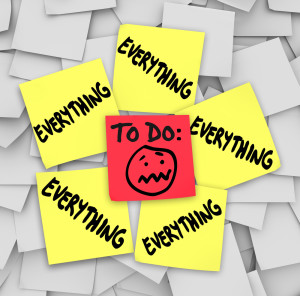 This is the third in our series about The Seven Deadly Entrepreneurial Sins. You can start from the beginning here. Gluttony is the second of the Operational Sins; those that reduce your personal effectiveness as an owner and the leader of your company. There are a number of indicators that you might be guilty of Gluttony. You are the first person to arrive every morning You’re the last one to leave at night You work weekends, but your employees don’t Your “to do” list can’t fit on one sheet of paper Even when you use columns You only work on the next deadline All of the above ... Read more This is the third in our series about The Seven Deadly Entrepreneurial Sins. You can start from the beginning here. Gluttony is the second of the Operational Sins; those that reduce your personal effectiveness as an owner and the leader of your company. There are a number of indicators that you might be guilty of Gluttony. You are the first person to arrive every morning You’re the last one to leave at night You work weekends, but your employees don’t Your “to do” list can’t fit on one sheet of paper Even when you use columns You only work on the next deadline All of the above ... Read more The First Entrepreneurial Sin - Lust Last week we described the Seven Deadly Sins of an Entrepreneur. This week, we’ll delve into the first Operational Sin; Lust. The Operational Sins reduce your personal effectiveness as a business owner. They prevent you from being as operationally effective, on a day-to-day basis, as you could or should be. If you aren’t efficient in your leadership role, it cascades down through your whole organization. Lust is the sin that springs from a lack of self-control. As an owner, few people in your business (if any at all) say no to you. They ask, “Boss, did you do that really important thing you were supposed to do ... Read more Last week we described the Seven Deadly Sins of an Entrepreneur. This week, we’ll delve into the first Operational Sin; Lust. The Operational Sins reduce your personal effectiveness as a business owner. They prevent you from being as operationally effective, on a day-to-day basis, as you could or should be. If you aren’t efficient in your leadership role, it cascades down through your whole organization. Lust is the sin that springs from a lack of self-control. As an owner, few people in your business (if any at all) say no to you. They ask, “Boss, did you do that really important thing you were supposed to do ... Read more The 7 Deadly Sins of an Entrepreneur The Seven Deadly Sins are alive and well in small businesses today. Far from being a hoary religious holdover from the Dark Ages, they are practiced assiduously by entrepreneurs everywhere. There is something to be said for any concept that catches the public imagination for fifteen centuries. First postulated by Saint John Cassian around 400 AD, the sins were codified by Pope Gregory the Great in the late sixth century, and popularized by Dante Alighieri in “The Divine Comedy” in 1315. They remain present on a daily basis in many businesses through the 21st century, 700 years on. The Seven Deadly Sins are Lust, Gluttony, Sloth, ... Read more The Seven Deadly Sins are alive and well in small businesses today. Far from being a hoary religious holdover from the Dark Ages, they are practiced assiduously by entrepreneurs everywhere. There is something to be said for any concept that catches the public imagination for fifteen centuries. First postulated by Saint John Cassian around 400 AD, the sins were codified by Pope Gregory the Great in the late sixth century, and popularized by Dante Alighieri in “The Divine Comedy” in 1315. They remain present on a daily basis in many businesses through the 21st century, 700 years on. The Seven Deadly Sins are Lust, Gluttony, Sloth, ... Read more |
|
Keystone Content:
Are you just beginning your exit planning journey? Here are two short articles from Your ExitMap Blog to help get you started. 3 Inarguable Reasons How prepared are you to Take a FREE 15-minute FIND A QUALIFIED EXIT PLANNER |