Exit Planning Tools for Business Owners

The Pig in the Python

The title of this section refers to a well-known biological phenomenon. The python family of snakes have hinged jaws that allow them to swallow animals much larger than their heads. These animals are gradually consumed as they pass through the snake’s digestive system. If the prey is very large, you can plainly see the shape of the animal as it moves through the snake.

It is just as easy to identify the progress of the Baby Boom generation through the American population. Whatever stage of life the Boomers were experiencing, the country was experiencing. And we all experienced it together. (see my timeline at The Boomer Bust) Although the pure size of the Boomer generation underlies a lot of its impact, there were two other factors, commonality and competitiveness, that greatly enhanced it.

I grew up in the industrial Middle-Atlantic Northeast. “Ethnicity” in my world meant Polish, Italian, German or Irish. Of course we had discrimination, bigotry and ghettos. I cringe at some of the racist nursery rhymes I was taught by my friends. (Thankfully, if I recited them at home my parents quickly explained why those words were bad.) But we didn’t have Jim Crow laws, or poll tests, and although my schools were largely white, it was as a reflection of the neighborhood, not of the law.

I had no idea what rhubarb or okra were until I was an adult. I had never heard of ice fishing. Iced tea came in one flavor; if you wanted it sweet you put sugar in it. When I was 20 or so, I remember reading a debate in a restaurant industry magazine about whether America was ready to accept a regional ethnic food as mainstream…pizza! I had a pizza parlor on virtually every corner. It shocked me to realize that everyone else didn’t.

Like most early Boomers, I grew up in a culture that was defined by regional and ethnic dominance. Children had for generations grown up with roughly the same attitudes, the same ideas, and the same habits as their parents. They just hadn’t experienced much else.

Then came television. The first stations broadcast in the late 1930’s, and television was a huge hit at the 1939 World’s Fair in New York, but WWII had put a stop to production of TV sets. Returning GIs were ready to spend on consumer goods, and factories built for wartime electronics production were more than ready to deliver. In 1948 the first networks began broadcasting syndicated content, and in 1951 color televisions first became available. The oldest Boomers were 6 years old.

Unlike almost every other country, the United States developed television as a private enterprise. As in radio, content was paid for by commercial advertising. In fact, many of the consumer brands that made radio so successful were the first to move headlong into the new medium.

Thus people watching television became “consumers.” The success of a show was determined by the number of products it sold. How long do you think it took for these advertisers to figure out that two out of every five people in the country could be targeted as a distinct audience? For the first time, a generation was identified as a market, and sold to by age, not by the regional or ethnic orientation of their parents.

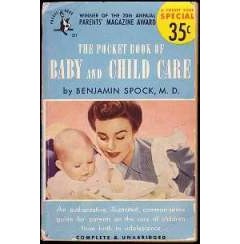
The WWII generation had already proven their willingness to spend on their kids. Scarred by the Great Depression, they focused on working to give their kids got the things they had lacked. They started by making Benjamin Spock’s 1946 book, The Common Sense Book of Baby and Child Care a huge hit, buying 500,000 copies in its first six months.  Children’s toys, books and shows quickly became an entire segment of the marketing industry.

For the first time, children were growing up encouraged to perceive themselves as children. They weren’t little adults in training. They weren’t just future farmers, or future factory workers. They were taught by parents and advertisers to think of themselves as children first, and as the life successors of their parents second.

And, for better or worse, 78,000,000 of them were all being raised pretty much the same way, at the same time.

Commonality made the Boomers a cohesive force in the American culture and economy like no generation before them. But sometimes that commonality took on the aspects of a school of fish, where thousands of individuals all turn in the same direction at the same time. This happened again and again and, as you will see, not least in the transformation of small business in America.

When it was combined with Boomer competitiveness, it changed everything. Next week, how the American Baby Boomers became the hardest workers in modern history.

The Approaching Tidal Wave

A year ago this month, I began speaking to business owner groups about “Beating the Boomer Bust.” Since then I’ve delivered the presentation over 20 times, both locally and to national groups, and the requests for it are increasing.

It’s the product of a year of research, and of fifteen years helping business owners prepare to leave their companies. I’m convinced, actually I am certain, that small business owners in America are ignoring a tidal wave of change that, just like a real tidal wave, will leave a few small businesses untouched while wiping many others from the face of the planet.

Am I being dramatic? Absolutely. Am I being overly dramatic? Not in the slightest. Peter Drucker once said “I don’t predict the future. I look at what has happened already and point out the inevitable result.

Two years ago I set out to learn whether the birth rate curve of the Baby Boomers was duplicated in other areas of American society and the American economy. Not only did that prove to be the case, but the correlation is shockingly perfect. When the Baby Boomers reach  an age where specific life activities would normally be expected, the incidence of those activities escalates overnight (with one notable exception that I’ll discuss in future weeks), in volumes not seen before or since, and exactly corresponding to the birth rate increase that started in 1945.

Describing it as a tidal wave isn’t at all metaphorical. Like a tsunami, it is well documented. The causes are known. It is traveling at a defined rate of speed. Its arrival is both inevitable and on a schedule. It will get higher and more dramatic as it approaches the coastline (Boomer retirement ages), and those who ignore the warning signs will be very, very sorry.

The impact will be universal, but I am going to focus on the implications for small business owners. Those who are exiting now will still have some options between selling to a late-stage Boomer and selling to Generation X, and should know what the differences are. Those Boomer owners who are planning to move on (perhaps not retire – another topic we’ll address) in the next 10 to 15 years need to understand the changed market that they will be selling in. Late-stage Boomers should be building a very different business than the ones they started or purchased. Post Boomer entrepreneurs need to assess the many opportunities that these changes will create.

Let’s start with defining the Baby Boom. Most of us know what it is, but it’s more than just a mere demographic description. Since this entire series will be about the inevitability of numbers, we should put the boomers in an economic context. Their numbers helped determine the personality traits of a generation, and of the generations that followed.

An important fact to understand in our discussion is that the Baby Boom is an American phenomenon. We were late to join World War II, and suffered far fewer causalities as a percentage of our young male population. In addition, the US was never a battlefield in the war, so our returning armies were discharged into a healthy infrastructure, with an industrial base fully geared up for maximum production.

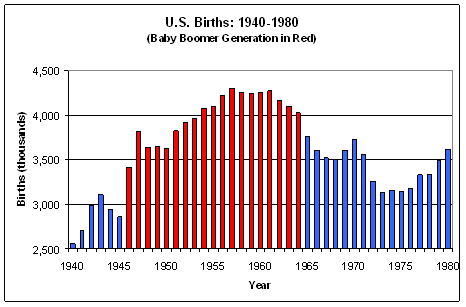
In 1945, as the GIs began returning from WWII, the US population was 140 million, and the birthrate was about 2.8 million. That number of births had been roughly consistent, between 2.5 and 2.9 million, from 1900 onward, with one noticeable dip in the middle of the Great Depression.

In 1946, the birthrate exploded to 3.47 million, a 24% increase in one year! New births broke the 3.5 million mark for the first time in 1947, 4 million in 1954, and peaked at 4.3 million in 1957. They didn’t fall back below 3.5 million a year until 1971, and then didn’t reach the 4 million mark again until 1989.

In 20 years (1945-1964) the United States had added 78 million new, natural-born citizens to the population. By 1965 the US population had grown to about 195,000,000. which meant that two out of every five people in America was under 20 years old!

This was the uniquely American phenomenon that was to influence everything for the next sixty years. The impact of the Baby Boom has changed social and cultural mores, the job market, business structures and economics. As they exit the workplace, the Boomers will have one more giant shift to their credit, and it will change the face of small business in America.

If you are a Boomer business owner, know a Boomer business owner, or provide services to a Boomer business owner, I encourage you to share this first chapter of the series. By the time we reach the end, I can promise you that you will view the next ten years in a whole new light.

Hunting vs. Farming

At the family gathering, you are being introduced to a distant cousin you haven’t seen since childhood. The introduction usually includes your status as a business owner. “Do you remember little Cousin Bobby? He owns his own company now.” Or you hear it as you pass a conversation; “There goes Rebecca. You know, she has her own business.”

 You know what they are thinking. It may be the somewhat awed tone of being in the presence of success, or a “Who would believe it?” skepticism. When you are a business owner among non-owners, the undercurrent of envy and admiration comes from certain commonly held beliefs about the lifestyle of a business owner.

 You pay yourself as much as you want. As the holder of the checkbook, you can just decide how much salary you need, and take it. After all, if you determine other people’s compensation, so you determine your own, right?

 You only work as much as you want. No one tells you to be in the office by a particular time. No one orders you to stay at your desk until a deadline is met. You can’t get fired for leaving early. You don’t have to accrue vacation. If you work a lot of hours, it’s probably just because you like money so much, and want more. (See belief number one, above.)

 You only do what you want to do. That’s why you have employees. You can pay people to do whatever you don’t like to do. You write your own job description, as well as everyone else’s. No one is crazy enough to write a job description for themselves for a job they wouldn’t want to do! (Are they?)

 Of course, you are probably smiling right now. We know what it takes to start and build something that achieves that level of freedom. It can take years to get there, and it’s seldom an easy road. Many of us never make it that far.

 But it could be true. The vision other people have of an ideal entrepreneur’s life isn’t wrong, it is merely miss-timed. The entrepreneur always believes that such a lifestyle is in the future, it just isn’t here yet. It will just take a lot of work, a lot of talent, and at least a modicum of luck to make it happen.

 It should be true. Along the way, however, many (if not most) entrepreneurs stall in the  “lots of hard work for inadequate reward” stage of building a business. It happens because as the business grows, they are drawn away from what they enjoyed the most, from what they were best at, and into what the business demands that they do. They become farmers.

 Management is farming. Balancing the checkbook is farming. Paying the rent is farming. Locking up the business at night, or opening it in the morning is farming. Purchasing supplies is farming. Writing procedures is farming.

 Bringing in new sources of revenue is hunting. Finding and training great employees is hunting. Closing deals is hunting. Outmaneuvering your competitor is hunting. Motivating people to excel is hunting.

 As an entrepreneur, you owe it to your company, your employees, your customers and yourself not to get tied down in farming activities. You started your business to do what you do best- not so that you could teach yourself a set of skills that you have little inclination to learn.

Picture Credit

The (pen)Ultimate Hire

Every sane business owner will acknowledge that there is a point at which his or her own skills are no longer sufficient to grow the business beyond its current level. The revenue point where that happens differs by industry, but it frequently begins at around 20 employees.

At that point, an owner becomes swamped by the conflicting needs of managing the existing operation, and having enough time to perform the tasks that made the business grow in the first place.

The owner realizes that further growth requires the addition of a key employee; one who can assume some of the owner’s duties so that he or she can focus on organizational development.

The typical plaint in this situation is “I need someone who can think. An employee who can run things without my daily input, so that I can focus on what I do best.”

But there is another version that is materially different, although it sounds the same on the surface. “I need someone who can run this company without me.” is a far cry from one who can handle day-to-day operating responsibilities.

Many owners fail to look beyond the immediate need for task relief  to determine exactly what this key employee’s long-term role will be. There is a big difference between hiring an SIC (Second In Command) and an SIT (Successor in Training.)

A Second In Command is responsible for assuming some of the owner’s ongoing decision-making and management duties. The SIC’s role is to free the owner to do what he or she is best at (or enjoys the most). The job description is based on the assumption that the owner is present, or at least available, to check off on major decisions and give ongoing guidance.

In my presentation to business owners, “Beating the Boomer Bust” I discuss the likelihood that many owners will have to execute their own succession plan by growing a successor internally. This Successor In Training is more than someone who can merely back fill your skill set. It needs to be someone who can eventually replace your skills in the business.

The common wisdom is that an SIC should compliment, not duplicate, your talents. We advise owners not to hire a “mini-me,” since it is unlikely that you can find someone who has the same motivations to cover all the various skills that ownership requires.

Typically, you take your job description (finance, sales, business development, culture, motivation, operations, marketing, management) and subtract those things that you want to continue doing personally. The rest of the duties become the SIC’s job description.

But the intention of many owners is to develop the SIC into an SIT. An SIT is someone who can eventually assume all of your higher-level duties. He or she has to create value while you are still there by filling in the gaps in your skill set, but must also have the potential to grow into a broader role as you prepare to withdraw from the business.

Of course, you are still in for a long search if you seek a “mini-me.” The likelihood is that your SIT will eventually need an SIC of his or her own. If you can’t run the company by yourself, your successor can’t either. If you need an SIC now who pays closer attention to the numbers and ratios than you do, then that person will eventually need someone to focus on sales and development.

Hiring a key executive is the single most important decision you will make. Don’t begin the process by making the mistake of looking at only the needs you have today. A solid SIC will probably take five years to fully integrate with you. An SIT may take ten. The investment can be wasted if you look only at your immediate needs. Start with a longer-term vision of how you want your role as an owner (or as an ex-owner) to play out.

Another Lost Generation?

I had the opportunity to present “Beating the Boomer Bust” twice this week, one of which was recorded for a Texas Public Radio show this weekend. For those who aren’t familiar with the piece, it discusses the massive changes that are unfolding as Boomers retire from their businesses.

As usual, members of the audience said afterwards “I knew all those things, but I never thought through the implications before.”

A quick recap before I get into today’s topic. “Beating the Boomer Bust” is a look at the perfect storm facing retiring owners who plan to sell their businesses. That largest small-business-owning group in history will be selling all at the same time. The number of buyers is about half as large as the number of sellers, and the buyer generation (Gen X) isn’t interested in the type of work that small business entails.

It is that group, the buying generation, that could be facing a demographic squeeze that changes them into a new “lost” generation.

The first Lost Generation is the group born in the decades just before the beginning of the 20th century. The oldest members of that group were in their teens and 20’s during WWI, which decimated the ranks of the young men, although less so in the USA than in Europe. Those who returned were traumatized, and more worried about enjoying life than making their mark on the world.

Enter the Roaring 20’s. The Lost Generation writers, Gertrude Stein, Ernest Hemingway, F. Scott Fitzgerald and T.S Eliot among others, promoted both hedonistic lifestyles and a cynical outlook towards humanity. The 20’s generally bring to mind Flappers, Speakeasies, Gangsters, and a spectacular finish with the Great Depression of 1929.

Many generations have been characterized as wastrels when they are young. The Lost Generation had the added misfortune to reach their productive years, their 30’s and 40’s, just as the economy made it very, very difficult to get ahead. Now, let’s skip forward to Generation X.

What Boomer hasn’t complained about the work ethic of Gen X? Gen X was born and raised in a time of plenty. They have grown up in an economy that was fueled by a giant generation of workaholics, the Baby Boomers. Their values system places a far lower premium on business and financial accomplishment. Self-actualization comes first, accumulating things is secondary.

Disclaimer: Please don’t send comments about “I’m a Boomer and not a workaholic” or “I’m an X’er and work very hard.” No generational generalizations are universally applicable. I get it.

Now they have the added misfortune of being in their 30’s and 40’s when the economy isn’t very receptive to building wealth or rapidly expanding a business.

At first blush, I didn’t think that was a problem. With one X’er for every two retiring Boomers, there should be more than enough opportunity for even the marginally interested to succeed. The more I think about it, the more I begin to wonder whether that will be the case. Two other factors are coming into play, and both are huge.

The Boomers aren’t getting out of the way, and the Millennials are coming on fast.

Boomers haven’t saved enough to retire in comfort. They can’t depend on the government to make it up for them. They are healthier than any previous generation. If 60 is the new 40, why would they (outside of the public sector) suddenly step down at 65? They want to be busy, and they want to be wealthy. Many, if not most, are planning to spend at least a few additional years in that pursuit.

The Millennials (depending on who you ask, roughly the generation born between 1985 and 2005) are coming of age in a difficult environment. Jobs are scarce, finances are lean, and the position of America in the world is changing. All indications are that the Millennials will push harder than the X’ers to get what they want.

Where the X’ers are widely characterized by their sense of entitlement, the Millennials clearly expect their lifestyles to be a direct outcome of their success in work.

So this is what leads me to ask about a Lost Generation.

The Big Picture: 78 million Boomers, still working hard, and delaying their exit from the business arena. 38 million Gen X’ers, with high expectations and lower motivation. 80 million Millennials coming on fast and intent on competing for what they want.

The Small Picture: X’er in his late 40’s who has spent the last 20 years in business telling the employer how he wants his job to fit his lifestyle. He is waiting for a late 60ish Boomer in front of him to get out of the way. When it finally happens, he suddenly finds that there is a Millennial in his late 20’s who earns less and works more waiting to leapfrog him.

If you are a Boomer business owner who can’t find the next generation of leadership among your X’ers (and there are millions of you), start looking at your Millennials while you still have some time to train them.


Painting: Han Wu Shen “Young Worker” at paintinghere )