 A family business goes on from generation to generation, and having a structured succession plan helps in minimizing the problems and smooths out the process. Family business succession planning is the structured process of legally, financially, and operationally preparing your business for a smooth ownership handoff, covering everything from IRS valuations to trust structures.
Only 30% of family businesses survive to the second generation, and skipping a formal plan is the #1 reason. The tax exposure alone (gift tax, estate tax, capital gains) can drain decades of business value if no one plans.
In this blog, we’ll cover the right methods to transfer a family business to the next generation, tax strategies, common mistakes, and what a strong advisory team looks like.
Why Family Business Succession Planning Matters
Family business succession planning protects the business you built. Without a business plan, your family business won’t survive an ownership transition.
According to the Family Business Institute, only 30% of family businesses reach the second generation, and only 12% survive into the third.
- A clear succession plan reduces family conflict during the handoff
- It protects business value from unnecessary estate and gift taxes
- It gives the successor enough time to prepare for the role
- It prevents forced sales when a health crisis or death triggers an unexpected exit
When Should You Start Planning an Intergenerational Business Transfer?
Start intergenerational business transfer planning 10 to 15 years before your planned exit. By the time health issues or retirement pressures arise, the best tax-saving options are already off the table.
Starting early matters because:
- Successors need years of mentorship and practical training
- Annual gift strategies work better when you have more years to execute them
- A certified business valuation affects estate and gift tax filings
- Legal structures, such as trusts, buy-sell agreements, and entity restructuring, take time to set up correctly
The IRS and estate planning attorneys consistently recommend beginning formal planning no later than 5 years before an exit. Ten years out is better.
Key Steps in Transferring Ownership of a Family Business
Transferring ownership of a family business is a structured process. Missing one step can stall the whole transition or create serious legal and tax problems.
Step 1: Set Clear Goals for the Business Transition
Decide what you actually want.
- Do you want retirement income from a sale?
- Do you want to keep an advisory role?
- Do you want equal ownership among your children or control given to one person?
Write these goals down. Share them with your family and your CPA before any documents are drafted. Vague goals produce vague plans, and vague plans produce conflict.
Step 2: Choose and Prepare the Right Successor
Not every family member who wants the role is the right fit. A good successor should have:
- Relevant business or industry experience
- Leadership skills the team already respects
- A clear willingness to commit long-term
- Enough financial literacy to manage operations
Start preparing the successor early. Shadow roles, incremental responsibility, and mentorship work far better than a sudden handoff on day one of retirement.
Step 3: Get a Professional Business Valuation
Before you transfer a family business to the next generation, get a certified business valuation. The IRS uses fair market value to assess taxes on any transferred business interest.
Use a Certified Valuation Analyst (CVA) or an Accredited Senior Appraiser (ASA). Their report must be defensible if the IRS questions the transaction, because a fabricated number won’t hold up.
Step 4: Develop a Leadership Transition Plan
A leadership transition plan outlines who will take over, when, and how responsibilities will shift. It should cover:
- Key management roles and who fills each one
- The timeline for the current owner’s exit
- A communication plan for staff, clients, and vendors
- Decision-making authority during the overlap period
Without this, employees and customers get nervous, and nervous people leave.
Methods for Transferring a Family Business
Transferring a family business to the next generation depends entirely on your goals, tax situation, and family structure.
Selling the Business to the Next Generation
You can sell the business to your children at fair market value or at a discounted price. An installment sale (where the buyer pays over time) is common because it generates ongoing retirement income for the seller while spreading the tax burden.
One structured option is a Self-Canceling Installment Note (SCIN). If the seller dies before the note is paid off, the remaining balance is canceled. Your CPA can determine whether this fits your situation.
Gifting Ownership Shares
The IRS allows annual gifts of up to $19,000 per recipient in 2025 without triggering gift tax. You can gift ownership interests in an LLC or S-corporation over many years.
Minority interest and lack-of-marketability discounts can reduce the taxable value of gifted shares by 20% to 40%. This strategy works best when you start it early and maintain consistency year over year.
Passing the Business Through a Will or Trust
A will transfers business interests at death, but it goes through probate, a public, slow, and expensive court process. A revocable living trust avoids probate entirely and gives you more control over how and when the business transfers.
Irrevocable trusts like GRATs (Grantor Retained Annuity Trusts) and IDGTs (Intentionally Defective Grantor Trusts) are also used in family business transition planning to shift value out of the taxable estate at a reduced cost. These are complex and require an estate attorney.
Creating a Buy-Sell Agreement
A buy-sell agreement sets the terms for ownership transfer in advance. It defines who can buy shares, at what price, and under what conditions, including death, disability, retirement, or divorce.
Without one, a child’s divorce proceeding can result in the forced sale of business interests to a non-family outsider.
Tax Considerations in Family Business Succession
Family business succession planning gets expensive without a tax strategy. The IRS has multiple ways to tax a business transfer, and each one can take a serious cut if you’re not prepared.
Gift Tax & Estate Tax Implications
In 2025, the federal lifetime estate and gift tax exemption is $13.99 million per individual or $27.98 million for married couples. Transfers above this get taxed at up to 40%.
This exemption is scheduled to drop by roughly half after 2025 unless Congress acts to extend it. That makes 2026 a critical year to lock in high-value transfers before the window closes.
Capital Gains Tax Considerations
If you sell the business to your child, you pay capital gains tax on any appreciation above your original cost basis. Long-term capital gains rates sit at 0%, 15%, or 20%, depending on your taxable income.
Assets inherited at death receive a “step-up in basis,” which eliminates capital gains tax on all appreciation during the owner’s lifetime. Assets gifted during life do not receive a step-up in basis. This affects whether you gift now or hold until death.
Strategies to Minimize Tax Burden
- Use the $19,000 annual gift exclusion per recipient in 2025 to transfer shares over time
- Apply business valuation discounts to reduce the taxable value of gifted interests
- Use a GRAT to shift appreciation out of the estate at minimal gift tax cost
- Consider an irrevocable life insurance trust (ILIT) to cover estate tax liability with tax-free proceeds
- Plan wealth management decisions around the 2026 exemption sunset before it cuts the available exclusion in half
Managing Family Dynamics During the Transition
Family business transition planning that ignores the human side runs into problems even when the legal structure is perfect.
Balancing Fairness Among Heirs
Fairness doesn’t always mean equal. A child who worked in the business for 20 years and a sibling who pursued a different career are not in the same position. Equal ownership in that case creates resentment and operational problems.
Some families use life insurance to offset this. The business goes to the child who runs it. The other children receive equivalent value through insurance proceeds. It’s clean, documented, and it reduces the most common source of succession conflict.
Separating Ownership and Management Roles
Ownership and management are not the same thing. A child can hold shares without running daily operations. Establishing a clear governance structure (a family charter, an operating agreement, or a board) helps prevent role overlap and power disputes.
This matters most when multiple siblings own shares, but only one actually runs the business.
Common Mistakes in Family Business Transition Planning
Most failed transitions share the same mistakes. Watch for these:
- Starting too late: Planning with 2 years left gives you almost no good options
- Skipping the business valuation: The IRS won’t accept your best guess
- No written succession plan: Verbal agreements fall apart the moment stress enters the room
- Ignoring non-business heirs: Children outside the business resent being left with nothing
- Letting family conflict delay the decision: Conflict doesn’t resolve itself. Bring in a mediator before it escalates
The Role of CPAs and Advisors in Succession Planning
Transferring ownership of a family business involves tax, estate, and business law, as well as valuation considerations.
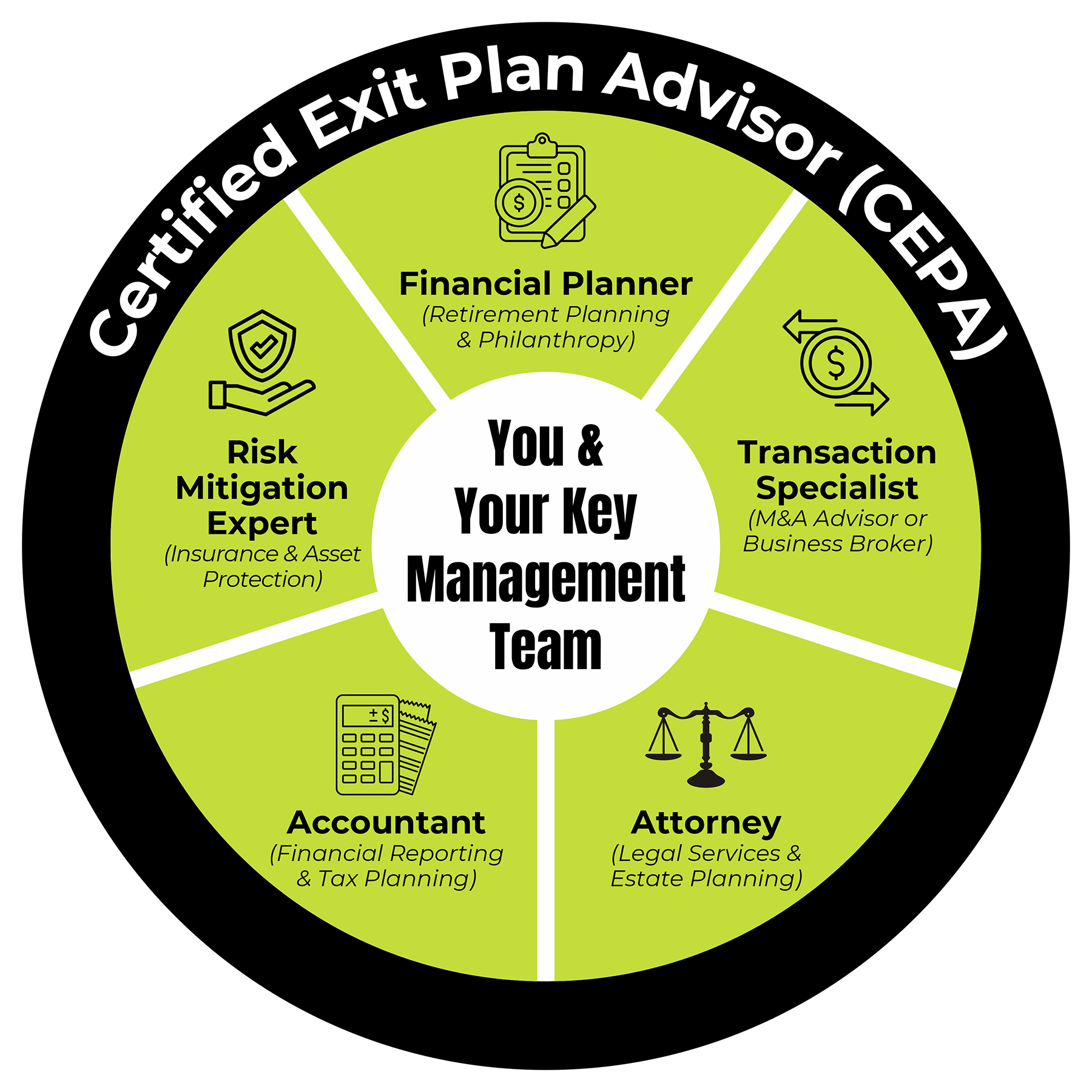
A strong advisory team includes:
- A CPA with direct business succession experience
- An estate planning attorney familiar with trust structures
- A certified business appraiser (CVA or ASA designation)
- A financial planner focused on long-term wealth management goals
- A family office advisory specialist for high-net-worth families with complex holdings
Family office services are increasingly common for business families managing large estates. They coordinate all advisors in one place, eliminating gaps and preventing conflicting advice from different professionals.
Amit Chandel is a “Certified Tax Planner/Coach”, and “Certified Tax Resolution Specialist”. He has extensive experience in Tax Planning and Tax Problem Resolutions – helping his clients proactively plan and implement tax strategies that can rescue thousands of dollars in wasted tax and specializes in issues relating to unfiled tax returns, unpaid taxes, liens, levies, foreign bank account reporting, audit representation, and any other type of tax controversy; Financial Consulting; Business Planning, Business Valuation, Forensic Accounting and Litigation support. He is the recipient of the prestigious Certified Tax Planner of the Year Award-2017, bestowed by the American Institute of Certified Tax Planners.