Exit Planning Tools for Business Owners

Is Your Business Built on Individual Heroics?

Great employees are a wonderful gift, but individual heroics aren’t healthy for your business.

Someday, you will start thinking about leaving the business. Perhaps you already do. When you begin planning for your transition, what will your company systems sound like when you describe them to a critical buyer?

“Yes, we have a process for that. It hasn’t been updated, but Martha knows it like the back of her hand.”

“We really don’t have anyone cross-trained on that machine. Bucky likes to work alone, but it’s okay because he hasn’t taken a vacation in three years.”

“We always use Andy on that route. There are lots of traffic snarls, and he’s the only one who seems to be able to finish on schedule.”

You are getting the point. When an employee is especially productive or reliable, it’s easy to become dependent on his or her individual heroics. It’s one fewer function of the business that you have to watch.

heroic workersIt is ironic that the very behaviors that make your life easier appear to be threats in the eyes of a prospective buyer. You know that they could pose a problem, but they haven’t so far. Why fiddle with what’s working?

The answer is because individual heroics discount the value of your business. A buyer worries that key workers might not like his or her management style. As a new owner, he might be immediately approached for pay increases. Worst of all, if one of your heroes’ performance heads south, he may not be able to fix it, or even know what is happening.

For just a moment, look at your best employees as threats. Do you have a contingency plan for each? Can Martha’s process be documented so anyone can do it? Is Bucky just a loner, or is he trying to make himself irreplaceable? Can Andy’s mental map be duplicated by routing software?

And in case you didn’t realize it, “I can do any of those jobs myself. ” is the worst of all possible answers. Those kind of individual heroics will send the buyer towards the exit instead of you.

Dependable high performers are invaluable, but they are frequently protective of their status. Recognize them, but make it plain that that their work needs to be duplicable. (Although, “Of course, not at the level you perform.”)

If you don’t, start looking at them as liabilities rather than assets.

Do you know a business owner who would enjoy Awake at 2 o’clock? Please share!

Good Customers Can Be Bad

When can good customers be bad? What could be wrong with a customer who buys a lot, pays promptly, and never has a service problem?

They might be buying too much. No matter how strong or comfortable a sales relationship is, it could end. You may be confident that the customer is yours for life, but therein lies the problem. Someone who buys the business doesn’t have the same level of confidence that the customer will be around for a whole new ownership lifetime.

Many mid-market companies rode one horse to success. There were bringing in a few million dollars in revenue when the landed “the big one.” Perhaps they had to scramble to add capacity and ramp up talent, but the seized the opportunity and met the challenge.

As these companies grow, the owners always say the same thing. “I know that it’s bad to have my eggs in one basket. I’m going to find other customers to even things out.”

big and little businessmenBut the good customer keeps buying more. They are twenty times your size, and an increase of 2% for them translates into 40% more for you. Businesses in this situation aren’t necessarily complacent. They are just scrambling to keep up.

This good customer brings many other benefits along with its dollars. They ask for plans and budgets, so you develop capabilities to meet their requirements. They coordinate packaging a shipping, so you learn more about logistics. They ask for detailed reporting, so you upgrade your tracking systems.

Your company’s increased capabilities translates into more business with large customers. You can show your ISO certification or online reporting. You deliver specifications or scope of work statements as professional as those of much larger competitors.

But you never quite catch up. You are like the dog that caught the pickup truck. You don’t have any control, but you can’t let go, either.

There is an obvious risk of good customers having a change in management or strategy, but for the most part the relationship is favorable. The problem arises when it is time to exit your business.

This issue is specific to mid-market companies. In a Main Street sized business, an entrepreneurial buyer (one who is purchasing a job) will often look at the steady income from a large account favorably. If you’ve grown large enough to attract a professional buyer, however, the “Quality of Earnings” audit will bite you.

Quality of earnings analyses are done by larger accounting firms for mid-market buyers, particularly private equity groups. Those firms typically charge between $20,000 and $60,000 for the audit. Not surprisingly, the client wants a return on that investment. That comes by way of discounting profitability associated with the “risky” business.

If the letter of intent is offering five time earnings, the price reduction is of course on a 5:1 ratio to the profits. Not to belabor the math, but if a $40 million company had $4 million in profits, and 40% came from one account, a 35% discount for that account alone would be $2,800,000 off the purchase price.

That’s when good customers can be bad.

Do you know an owner who would enjoy Awake at 2 o’clock? Please share!

Selling to Employees: Is Your Exit Strategy Right in Front of You?

When I interview a prospective client for exit planning assistance, we usually explore selling to employees. The first reaction is always “That won’t work. They don’t have any money.”

If you have a company with reasonable cash flow, a talented management team and sufficient time, selling to employees is not only a realistic option; it may be the best way to get value from your business. I’ll define those parameters for you in a minute.

If you haven’t read my eBook Beating the Boomer Bust, follow the link for the free download. My research shows that the hard numbers will inevitably translate into a hard market. There are 3,000,000 Baby Boomers (over 50) who own businesses with employees. Over the next 20 years, that’s an average of 150,000 owner retirements per year. Intermediaries (brokers, private equity and M&A) account for about 9,000 transactions a year.

That leaves a lot of folks looking for a way to cash out. Selling to employees is a process that lets you keep control until retirement. By structuring the sale correctly, you can leave with the proceeds in the bank, not in a promissory note.

How does that work? It requires a bit of mental gymnastics. First, any owner has to accept that the only source of funding for any transaction is the cash flow of his or her company. If a buyer pays cash, he expects that cash flow to pay him back. If a bank finances the acquisition, they expect the cash flow to service the debt. If you finance it, you are the essentially the bank.

Selling to employees is the same. You use the current cash flow to help employees buy stock. In return, they qualify by working to increase the value of the business until your final return is equal to (or more than) what it was when you started.

Think of it as taking a note for 30% of the purchase price while you are still in control, so that you can get a 70% cash down payment when you leave.

Now, let’s discuss the parameters.

Cash Flow: Your company has to be earning more than just your paycheck. My rule of thumb is that around $500,000 a year after owner’s compensation gives enough to work with. More than that doesn’t change much, since then we are usually looking at a higher purchase price. Less than that is doable in a longer time frame, or if the owner is willing to subordinate some debt to the bank.

Management Team: You need at least one decision maker who does more than just go through the operational motions. Any third-party lender wants to be comfortable with company leadership when you’re gone. A large portion of our planning surrounds transfer and documentation of management capability sufficient to satisfy a lender.

Time Frame: Many business owners tell me “I’ll think about exiting in five years.” That’s fine, if your plan is to retire in fifteen years. Generally speaking, the longer you have, the more lucrative an internal sale can be. I’ve done three year plans, but five is much more comfortable, eight years is even better, and we regularly work on transitions of ten years and longer.

all for one one for allSelling to employees requires legal agreements, specialized compensation plans and a willingness to run the company transparently. The return is a team that is committed to the long term, highly motivated, and all on the same page when it comes to growing the business.

Why should you consider selling to employees?  Because your company lives on with the culture you created. Because you can choose the value, not negotiate it. Because your employees aren’t comparing your company with other investments. Because you control the timing of your exit.

Because it is probably the biggest financial transaction of your life.

Do you know an owner who would benefit from reading Awake at 2 o’clock? Please share!

What is the Right Price?

Of all the misconceptions by business owners, the ones surrounding their company’s value are both the most common and often wildly inaccurate.

I’ve been working for the last couple of months on the training videos for advisors in our new product, The ExitMap®. (You can take the assessment for free at www.myexitmap.com). In one session, we role-play a vignette about a financial planner discussing the value of a business with a client planning retirement. Part of it goes something like this.

Q: “So Bob, how much do you expect to realize from your business when you sell it?”

A: “I’ve heard from my accountant that most small businesses sell for about five times earnings.”

Q: “And how much would that be?”

A: “Well, I made about $150,000 in salary last year, and another $200,000 in profit. Add in my insurance policies and my car, my wife’s car and a few trips that combined business and pleasure. Say around $500,000 in total benefits. So I’d expect to get somewhere around $2,500,000 for the business.

Q: “What would that be after taxes?”

A: “I’d have to pay capital gains, so I’ll net in the area of $2 million.”

Simple, right? Let’s look at the reality.

abacusBob is calculating what the brokerage industry calls “Seller’s Discretionary Benefits” or SDE. While it is a legitimate way to look at the full value of business ownership, ball park valuations of 4-5 times pre-tax earnings don’t apply to that calculation. Cash flow expensed for benefits (rather than dropping to a taxable bottom line), isn’t included in those earnings multiples. The traditional multiple for a small business sale averages 2.5 time SDE, or half of what Bob is estimating. We are immediately reducing the likely price to something like $1,250,000.
Next, about 90% of small business sales are asset transactions. Only about 10% close as a transfer of stock ownership. Double that tax estimate from 20% capital gains to a 40% ordinary income rate.

Businesses transfer debt-free. So if Bob owes another $300,000 on his credit line, that comes off the top from the proceeds, but the tax is still payable on that $300,000.

So Bob’s $1,250,000 drops to $750,000 after taxes, and to $450,000 after debt repayment. He has lost three quarters of the amount he was planning on for retirement.

The problem is exacerbated when the planner dutifully enters $2,000,000 in his retirement software, assuming that the owner certainly knows the value of his business. That happens more often than I care to discuss.

These misunderstandings are just the tip of the iceberg. There are another half-dozen common mistakes when owners look at their value. In many cases it results in owners being highly insulted by legitimate offers from qualified buyers. I’ve also seen them renege on accepted offers when they finally have a CPA model the tax impact.

(NOTE: I do not perform valuations, give tax advice, or broker businesses. My recommendations here will not generate revenue for me.)

If you are like 85% of all owners and plan to sell your business to a third party, the first thing to do is engage a valuation professional. The second thing is to take that valuation to your accountant for tax modeling. Start your exit planning by embracing reality. You’ll be a lot happier in the long run.

Thanks for reading “Awake at 2 o’clock”. Please share it with other business owners.

The 7 Deadly Sins of an Entrepreneur — Reprise

I make no claim that using the Seven Deadly Sins as a metaphor for business behavior is original. Of course, the original concept is a codifying of “undesirable” human behaviors, or sins. The work probably comes from the Latin word sons (guilty). Various sources attribute it to Old English and Hebrew, but since Latin was the language of the church, this seems most likely.

The concept of personifying the seven sins for popular consumption, as I mentioned in the first column in this series, goes back at least to Dante in the early 1300’s. It’s been used regularly in popular fiction including Roald Dahl’s Charlie and the Chocolate Factory (the five golden ticket winners each represent a sin, with Grandpa as Envy and Willie Wonka as Wrath); and in “Sponge Bob Squarepants” (I’ll assume that most readers don’t know the characters well enough to make identification worthwhile.)

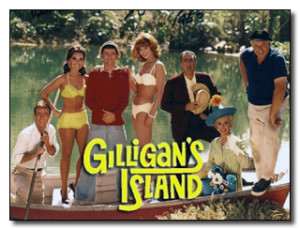
gilligans-titlePerhaps the most amusing application was in “Gilligan’s Island.” The seven castaways fill their assignments well. There’s Gilligan (Sloth), the Skipper too (Wrath).  The millionaire (Thurston Howell — Greed) and his wife (Gluttony). The movie star (Ginger — Lust, of course); The professor (Pride) and Mary Ann (Envy), here on Gilligan’s Isle (Hell?)

My apologies if I just stuck that tune in your head for the rest of the day.

When I present “The 7 Sins of an Entrepreneur” to business audiences, they take special delight in identifying their own behaviors. Maybe it’s because they are relieved (“Gee, I only have four.”) or because they are naturally competitive (“Hey, I hit on all seven!”)

What ever the reason, it’s an easy way to organize negative behaviors. Perhaps that’s why it has remained so dominant a concept. Regardless of your failings, they can probably be categorized as one of the seven sins.

Here is a synopsis in order, with the corresponding “virtues” that counteract each.

  • The Operational Sins: Those which reduce your personal effectiveness as an owner and leader.
    • Lust: Allowing whim du jour to drag the company in differing directions. (Counteracting behavior: A Personal Vision.)
    • Gluttony: Hoarding all authority and decision-making for yourself. (Delegation)
  • The Tactical Sins: Those which denigrate the effectiveness of your organization.
    • Sloth: Settling for “good enough.” (Metrics and Benchmarking)
    • Wrath: Using adrenaline to drive performance. (Planning)
    • Greed: Addressing any problem with more effort or more intensity. (Budgeting)
  • The Strategic Sins: Those that prevent long term vision and improvement.
    • Envy: Thinking that no one else has your problems. (Outside advice and knowledge)
    • Pride: Believing that you are the single most important factor in your company. (Exit Strategy)

The sins are addressed in order. Dealing with the Operational Sins allows you to tackle the Tactical problems. Strategic improvement is only possible if you’ve first dealt with Tactical issues.

The Seven Deadly Sins of an Entrepreneur are an excellent mnemonic for considering your own behavior and those of your company.  Keep them in mind as you run your business day-to-day.

If you enjoy “Awake at 2 o’clock,” please share it with other business owners. Thanks for reading!