Exit Planning Tools for Business Owners

Owners Live in Two Different Worlds

Business owners live in two different worlds. If you are a Baby Boomer, the title of this column might bring memories of any one of the many covers of the song by the same name. (Everyone from Nat King Cole to Roger Williams, and from Jerry Vale to Englebert Humperdinck recorded it.)

My application of it in business refers to the chasm between those owners who plan to sell a business valued at less than $3 million, and those who have companies valued at more than that. In M&A parlance; “main street” and “mid-market” businesses.

business presentationSome background is in order. I spent the week at two conferences. At the Business Enterprise Institute’s Exit Planners’ Conference we talk mostly about the complexities and structures of mid-market transfers. From there, I attended The Alternative Board’s International Conference for advisors who run peer advisory groups and provide coaching, principally for the owners of main street companies.

At the latter, I had the privilege of being on a panel with Bo Burlingham of Inc. Magazine, the author of Small Giants and Finish Big, and John Warrillow, the Founder ofBurlingham Warrilow Dini the Value Builder System and author of  Built to Sell. It would be challenging to find three people in the country who have spent more combined time studying how small businesses sell, and what determines their value to a buyer.
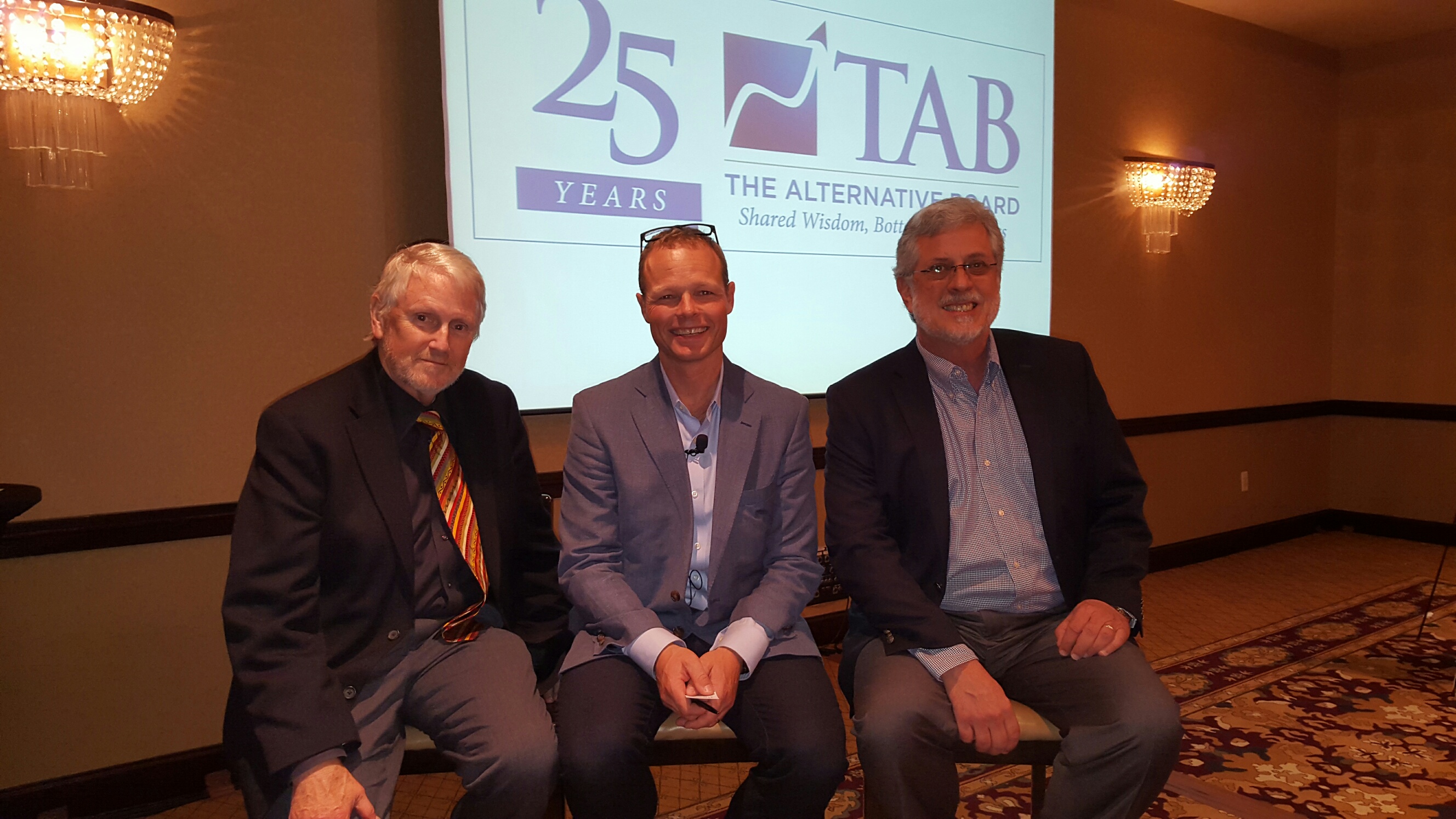
Even with two audiences of savvy professionals who are focused on the flood of business owners transitioning from their businesses, in many sessions the presenters had to explain the difference between the two markets. As an owner, it’s critical that you understand what the market is for your company. Using data from the other side of the fence is only destined to frustrate you.

Mid-Market

These are companies with a value (not revenue!) of greater than $3,000,000. To garner the interests of financial buyers (private equity groups), they have to generate pre-tax earnings of at least a million dollars a year. To attract strategic buyers, they must have some real differentiation in their industry or market. Those who are truly scalable and have already grown to over 100 employees are the hottest commodity; but according to Doug Tatum, the author of No Man’s Land, they presently account for about 30,000 of the 6.5 million private employers (2-500 employees) in the marketplace.

The acquisition outlook for these companies is wonderful. The financial market is blazing hot, with 7,000 private equity players and publicly traded acquirers chasing those 30,000 businesses, or at least any among them who will still take a phone call. Valuations  are growing quickly, with multiples in the upper end of the market up over 20% in the last two years, and well over a trillion dollars of “dry powder” waiting to be spent on buying them.

Main Street

Clearly, the odds are pretty high that you are one of the 6,470,000 owners whose company does not fit the description above. Welcome to Main Street, where differentiation is difficult or impossible to quantify. (Sorry, but in all but the rarest cases,  “service” is not a competitive differentiation.) The business exists primarily for the purpose of providing financial security for the owner and the employees.  Likely acquirers include individuals seeking to purchase an income, small competitors, or if you are close to the million dollar pre-tax mark, perhaps a private equity group looking for a “tuck-in” or “bolt-on” to an existing similar acquisition.

The news for these owners could not be more starkly different than for the chosen few in the mid-market. According to Burlingham, somewhere between 1.3 and 2 million of these businesses will come up for sale in the coming decade. According to both IBBA (the business broker’s association) and the US Chamber of Commerce, only about 20% of them will successfully sell to a third party. With the much lower population of Generation X, who have little in the way of liquid savings and eschew 50 hour work weeks, the pre-tax multiples in Main Street values are contracting, and the shrinkage grows worse the farther down the food chain you are.

The message is clear. As John Warrillow said, if you are anywhere close to the magic numbers that attract mid-market buyers, the most important thing you can do is drive your company over the top. The difference can mean double, or even triple the proceeds you receive. Here’s an exercise. A company making $700,000 a year with a valuation of 3x earnings can sell for $2,100,000. If they grow to $1,100,000 in profits with a value of 5x earnings they’d get $5,500,000 at sale. That’s 57% growth in profits for 161% growth in price.

Any questions?

Even the measurement of earnings between the two types of business is different. We’ll discuss that next week.



Ageing Boomer Entrepreneurs: Fearful or Smart?

Do we become more cautious with age?

Startups are usually associated with younger entrepreneurs. By the time they reach their 50s or 60s business owners tend to tackle fewer big new ideas. Those that do tend to be successful enough that they can segregate the risk in a way that won’t threaten their core livelihood. Are they smarter, or just more fearful of failure?

There are any number of business axioms about the value of experience. “Experience is what you get when you don’t get what you want.” or “Good decisions come from experience. Experience comes from bad decisions.” Does the caution that accompanies age come from experience, or just from a natural reduction in adrenalin?

The youngest Baby Boomers turn 50 this year. Collectively, they represent over half the small business ownership in the United States. There is an important macroeconomic issue attached to the general ageing of owners. If risk-aversion is a biologic phenomenon, then we can expect millions of small employers to drift into “harvest mode,” maintaining their businesses as vehicles for current cash flow and retirement security. They will leave growth and innovation to a younger, but substantially smaller group of entrepreneurs.

Some of their caution is due to external influence. As companies grow and founders age, they become far more conscious of their responsibility to employees’ families and children. Putting everything on the line has potential impact not only on workers, but the extended small economy that depends on their wages. Greater responsibility generates greater caution.

danger aheadWhen you are starting out, have fewer people depending on you, and mistakes have fewer consequences (see my 2014 post The Luxury of No Resources),  it’s easier to take a leap. If you fail, you’re not much worse off than you were before. But there are costs to learning by trial and error. After a while, going back to the drawing board becomes tiresome.

Ideally, the caution that comes with age isn’t from fear. It’s because you’ve come to appreciate the value of planning. It’s not because you are afraid to make a mistake, but rather you want to avoid the delays that come with making repairs every time you hit a pothole.

Every school of business wisdom extols the value of planning. When we are younger, we tend to ignore it. We scoff at Abraham Lincoln’s quote “If I had eight hours to cut down a tree; I’d spend seven sharpening my saw.” The tree is right in front of us. The saw is in our hands. We can sharpen as we go. Sometimes that works. Often it doesn’t.

Many Boomer owners will operate from a fear of failure. Their businesses will fade as the world continues to change around them and they don’t adjust. Hopefully, they’ve been successful enough in the past to exit comfortably.

Some, likely a small minority, still seek to leave a bigger legacy. They have a shorter time frame, lacking the 30 or 40 years of a full career ahead of them. They’ve learned to spend the seven hours sharpening, so that the hour spent sawing is easier and more productive. Those entrepreneurs will adjust to change on their own timetable, but  with far better results.

Their caution isn’t from fear, but from experience.


Where Will All the Small Businesses Go?

What would the small business landscape look like if over one million small businesses disappeared? Get ready, it’s about to happen.

I write and speak frequently about the passing of the entrepreneurial generation. Driven by competitive pressures to succeed, the Boomers became small business owners in unprecedented numbers not seen since. They now account for about 2/3 of all the small employers (under 500 workers) in the United States.

The two generations that follow, the Xers and Millennials, don’t have the capital, the material ambitions, or the need to chase the Boomers into small business. For a free download of my ten-article series on this transition, go to The Boomer Bust and use the password “Woodstock.”

For one moment, let’s just review the numbers. In 2018, all Boomers will be between 54 and 73 years old. Eight thousand a day will be turning 65. The Xers who can buy their businesses will be turning 45 only at a rate of 4,000 a day. Nothing can be done to change this gap.

closed doorsJust over 7% of Boomers own companies with employees, or about 5,500,000 small businesses. That equates to about 215,000 owner retirements annually. If the Xers were willing and able to buy businesses proportionate to their numbers (and they are neither willing nor able,) we will still have over 100,000 businesses a year without buyers. That is 300 businesses a day closing, seven days a week, 52 weeks a year, for ten years.

I’ve been discussing this demographic tsunami since 2007. A few other writers are beginning to realize how big this shift will be. There is no cure. We can’t make people who aren’t interested in a Boomer lifestyle into workaholics. We can’t fund budding entrepreneurs who  have no means to secure traditional financing. We can’t change the sheer volume of retiring owners.

The term “exit planning” is spreading fast, and with good reason. It is going to be the hot button for millions of small business owners throughout the rest of this decade and the next. If your plan is to work until you just don’t feel like it anymore, and then expect to have someone jump at the opportunity to take over from you, think again. The market will be crowded, and only the best-run small businesses will find a buyer.

This week we were reviewed by Martin Zwilling in the Huffington Post. Thanks Martin!  Hunting in a Farmer’s World: Celebrating the Mind of an  Entrepreneur is a nominee for Best Small Business Book of the Year. Please support us, and entrepreneurs everywhere, by taking a moment to cast your one-click vote here. Thank you!

1 nomination badge


What is Your Company Worth? II

Last week we discussed how business owners frequently use hearsay or incomplete information to estimate the value of their companies. They give the number to their financial planner, or include it on a personal financial statement for their banker, neither of whom bat an eyelash at the estimate. Having the amount “accepted” by financial experts, the owner starts to treat it as fact. How do you know whether it is realistic or achievable?

alchemistValuation of a small business is a combination of art and science. No two small companies are alike. A multiple of profits or cash flow is only the starting point. Take two small companies, each with $4,000,000 in revenues and $500,000 in profits. Each pays the same salary and benefits to the owner. One does it by having systems that control most day to day activities, recurring revenue from contracts, and long-term employees who are incented by profit sharing. The other does it with an owner who works 70 hours a week, hasn’t had a two week vacation in ten years, and makes every new sale personally. Which business would you pay more to own?

Beauty lies in the eye of the beholder. The multiples paid for businesses depend on the type of buyers they attract. Commonly, those that sell for less than $2,000,000 are considered “Main Street.” Their target buyers are individuals who are purchasing an income. They intend to work in the business, and to earn a regular paycheck by running it.

Main Street businesses are valued by a multiple of Seller’s Discretionary Earnings (SDE). The value of the business is based on the sum of the financial benefits resulting from ownership. That includes profits, salary, benefits and any of a long list of possible perquisites like a company car, travel, or insurance. (For more on calculating your SDE and selling a business in general, you can read my book, 11 Things You Absolutely Need to Know about Selling Your Business.)

Main Street pricing is typically between 2.1 and 2.8 times SDE. It is based on simple arithmetic. The closer you come to 3 times SDE, the less able a buyer is to pay both the bank and himself. You can run your own numbers here, to see how it works (registration required).

For larger companies, those that attract financial and industry acquirers, the multiples are higher, but the multiplier is lower. Those buyers anticipate paying for professional management, so the owner’s compensation is less of a consideration. They look at EBITDA (Earnings Before Interest, Taxes, Depreciation and Amortization) to calculate available cash after all the expenses of running the business (including executive talent) are paid.

Competitors will calculate the savings they might realize from consolidation, but are usually reluctant to multiply those savings in a purchase price. Private Equity Groups (there are 7,000 in the US) and the acquisition arms of large companies seldom look at businesses with earnings of less than $1,000,000. As amazing as it seems to a small business owner, their due diligence and legal processes are too expensive to make smaller acquisitions worthwhile.

Private Equity Groups pay an average between 4.7 and 5.2 times EBITDA, year in and year out. That makes sense, because they are financial buyers with a targeted Return On Investment (ROI). Large company acquisitions of smaller businesses can range from 4 times EBITA up to around 7 or 8, although in a few cases strategic considerations (competition, exclusive contracts, proprietary methods) can drive that up substantially .

All of these are real numbers, based on actual sales data and industry surveys. Sellers often confuse the terms revenue and income, or apply EBITDA multiples to SDE. They are greatly disappointed and angry when legitimate offers fall far below their expectations. Just because your planner or your banker didn’t challenge your valuation estimate doesn’t make it fact.

My new book, Hunting in a Farmer’s World: Celebrating the Mind of an Entrepreneur, is now available on Amazon in paperback, hardcover and Kindle. It is an ownership book, not a management book, and is illustrated with the stories of real entrepreneurs who faced challenges that apply to us all.

Ready…Set…Exit! Part II

Last week we discussed the tsunami of Baby Boomer retirement, and how we will reach a peak of nearly 500 unsold businesses a day within the next 5 years. The statistics are immutable. The birthrates of the last century are fixed in stone. (If you haven’t read my e-book Beating the Boomer Bust you can get it for free here. Use the download code “Woodstock”.)

Once you understand the inevitability of competing to sell your business in a buyer’s market,  you have five choices.  The first  is to simply ignore it and hope for the best. For any owner who holds most of his or her net worth in the company, that’s not a great option.

The second is to watch, and wait for an opening. That requires following small business sales for favorable trends, and a flexible retirement plan that can take advantage of market conditions or an unexpected opportunity.

The third is planned liquidation. If you can achieve your financial goals by running the business a while longer, and you choose not to invest in building a company that runs without you, this is a viable strategy, albeit without the satisfaction of a large final payday.

The fourth is to build a business suitable for sale in a highly competitive environment. Such a company must have strong systems, dependable revenues, accomplished management (not including you), and profitability greater than most other companies a buyer might consider, whether those are in your industry or not.

handoffThe fifth strategy is to build your own internal exit plan, and execute it without many of the unknowns involved when taking your business to the market. It requires choosing an insider (family or employee) who understands the business, and is happy to have the opportunity to own it. Of course, that person should also have the ability to run it successfully, or at least the potential to learn those skills.

But wait. Didn’t I just write last week that selling the company to employees for a note was a terrible exit plan? I did, and it is. Selling the company to insiders doesn’t require that you bet your retirement on their continued success. With time and careful planning, it can be done in a way that minimizes or eliminates your risk.

First, any owner has to accept the fact that the company’s cash flow is the only means of payment for a purchase. Whether a buyer gives a note to you, borrows the price from a third-party lender, or invests cash with the expectation of a return on investment, the profits of the company are the source of repayment.

Selling to an insider is  a process where you take a note from the buyer before you leave, while you are still in control of the business. The buyer’s right to purchase is predicated on improving performance. You surrender some immediate income in return for incentive triggers that make your total sale price equal to or higher than what you would currently realize.

Once your internal buyer accumulates sufficient equity to qualify, he obtains a loan for the balance of your ownership. You receive 80% or more of your target price on the day you retire, and walk away with minimum ongoing liability. (I say 80% because most financial institutions like to see some incentive for the former owner to watch and advise for a few years. It can be up to 100%, depending on the lender and the company.)

With the right plan and the right people, the business transfers at a fair price with minimal cost and lower risk. The buyer(s) (whether one person or a management team) are incented to keep growing the business to qualify for ownership. While they are doing that, they are also assuming the management duties from you as a prerequisite for ownership.

Most important, you maintain control of the business until you are paid. For most owners, that is the most influential argument of all.

This is a column about the general issues of business ownership. I discuss exiting regularly because it is an important issue, but it isn’t the only aspect of ownership we discuss here. To receive my biweekly newsletter on exit strategies and issues, please subscribe here.

Picture Credit