Exit Planning Tools for Business Owners

The Brass Ring

A long, long time ago (I’ve actually ridden only one such in my lifetime) Carousels had a spring-loaded sleeve of brass rings protruding near the innermost (and least popular) track of horses. A bigger kid could lean out and yank a ring from the sleeve with considerable effort, and be rewarded with a free ride.

Today, of course, we can’t even read the description of such an ill-conceived device without cringing at the thoughts of fallen children, their bodies horrifically mangled in the giant gears of the turntable, and the litigation and public outrage that would follow. Times change.

“Reaching for the brass ring” has become a metaphor for chasing success. As I discussed in last week’s column, the massive number of Baby Boomers would have affected the economy regardless of their other tendencies, but their commonality and competitiveness raised that impact by an order of magnitude.

If you are a Boomer business owner, I defy you to say that you’ve never complained about the work ethic of the younger generation. From the mid 70’s to the mid 90’s (prime time for Boomers in the workforce) American white-collar workers saw the rise of an average work week from just over 40 hours to almost 54. This while our European contemporaries were  campaigning for (and winning) 35 hour weeks and ten weeks of vacation. What made American Boomers so competitive?

Our numbers. There were simply too many of us to accommodate at every stage of our lives. Just as the impact of ageing Boomers leaving the workforce will come as a surprise to most, so the flood of people into schools, homes and jobs took the majority of businesses (and governments) by surprise.

I attended public schools in the 1950’s where 45 or 50 children were the norm in a classroom. It had nothing to do with unenlightened teaching methods or weaker unions. There simply weren’t enough classrooms. Between 1945 and 1957 the annual number of new births in the country increased by 53%, from 2.8 million to 4.3 million. They couldn’t build schools fast enough.

When I started college in the late 1960’s, they were pulling trailers into muddy fields and calling them community colleges. There weren’t enough universities for all those who wanted to attend. And when I graduated and applied for a position in corporate America, their hiring offices were like the Department of Motor Vehicles, with group testing and rows of interviewing offices.

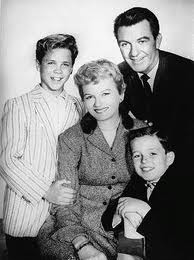
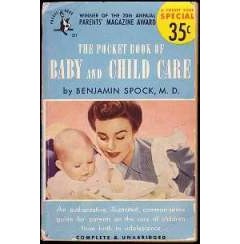
It was a time of plenty in America, but there wasn’t enough of what the Boomers were seeking. The “Spock Babies,” as we were called, had been raised to believe that every one of us could, and should, succeed. We all expected the corner executive office, but there weren’t enough places for everyone.

(An aside: I’ve always been curious about Gene Roddenberry’s selection of a name for the First Officer of the Starship Enterprise. Was there some subliminal appeal that helped make Star Trek one of the most popular Boomer shows in history?)

From 1966, when the first Boomers turned 21, through 1975, the rate of college graduations in the United States tripled on an annual basis, from just over 600,000 to nearly 1,700,000 a year. (See the timeline at The Boomer Bust)

Baby Boomers competed for the better places in schools and for admission into the better universities; and then competed fiercely for jobs when they graduated. Once employed, they were part of a glut of other qualified Boomers; roughly the same age, and with similar qualifications. The brass ring went to the ones that worked hardest, longest and smartest. An entire generation accepted competition as a way of life. It was a numerical inevitability.

But many Boomers were squeezed out by the numbers, or were disinclined to engage in a battle for promotions and raises. They still wanted the gratification that Dr. Spock said they should have. They still expected the brass ring.

They went into business for themselves.

From 1975, when the first Boomers turned 30, until 1986, the formation of new businesses in America jumped from 300,000 to 700,000 annually. By 1990, when the oldest Boomers turned 45, the number of new business formations had fallen back to 600,000. It has remained there since. As our population has grown from 190 million to 310 million, the number of business start-ups has been flat.

The massive number of small businesses in the United States, the source of 67% of all new job creation since 1995, is clearly the product of millions of Boomers who sought success outside traditional wage-paying jobs. For the first time since the industrial revolution, (when production consolidated into large enterprises) America became a nation of shopkeepers again.

These are the businesses that are beginning to be sold. Whether there are enough buyers is another question.

Picture Credit

The Pig in the Python

The title of this section refers to a well-known biological phenomenon. The python family of snakes have hinged jaws that allow them to swallow animals much larger than their heads. These animals are gradually consumed as they pass through the snake’s digestive system. If the prey is very large, you can plainly see the shape of the animal as it moves through the snake.

It is just as easy to identify the progress of the Baby Boom generation through the American population. Whatever stage of life the Boomers were experiencing, the country was experiencing. And we all experienced it together. (see my timeline at The Boomer Bust) Although the pure size of the Boomer generation underlies a lot of its impact, there were two other factors, commonality and competitiveness, that greatly enhanced it.

I grew up in the industrial Middle-Atlantic Northeast. “Ethnicity” in my world meant Polish, Italian, German or Irish. Of course we had discrimination, bigotry and ghettos. I cringe at some of the racist nursery rhymes I was taught by my friends. (Thankfully, if I recited them at home my parents quickly explained why those words were bad.) But we didn’t have Jim Crow laws, or poll tests, and although my schools were largely white, it was as a reflection of the neighborhood, not of the law.

I had no idea what rhubarb or okra were until I was an adult. I had never heard of ice fishing. Iced tea came in one flavor; if you wanted it sweet you put sugar in it. When I was 20 or so, I remember reading a debate in a restaurant industry magazine about whether America was ready to accept a regional ethnic food as mainstream…pizza! I had a pizza parlor on virtually every corner. It shocked me to realize that everyone else didn’t.

Like most early Boomers, I grew up in a culture that was defined by regional and ethnic dominance. Children had for generations grown up with roughly the same attitudes, the same ideas, and the same habits as their parents. They just hadn’t experienced much else.

Then came television. The first stations broadcast in the late 1930’s, and television was a huge hit at the 1939 World’s Fair in New York, but WWII had put a stop to production of TV sets. Returning GIs were ready to spend on consumer goods, and factories built for wartime electronics production were more than ready to deliver. In 1948 the first networks began broadcasting syndicated content, and in 1951 color televisions first became available. The oldest Boomers were 6 years old.

Unlike almost every other country, the United States developed television as a private enterprise. As in radio, content was paid for by commercial advertising. In fact, many of the consumer brands that made radio so successful were the first to move headlong into the new medium.

Thus people watching television became “consumers.” The success of a show was determined by the number of products it sold. How long do you think it took for these advertisers to figure out that two out of every five people in the country could be targeted as a distinct audience? For the first time, a generation was identified as a market, and sold to by age, not by the regional or ethnic orientation of their parents.

The WWII generation had already proven their willingness to spend on their kids. Scarred by the Great Depression, they focused on working to give their kids got the things they had lacked. They started by making Benjamin Spock’s 1946 book, The Common Sense Book of Baby and Child Care a huge hit, buying 500,000 copies in its first six months.  Children’s toys, books and shows quickly became an entire segment of the marketing industry.

For the first time, children were growing up encouraged to perceive themselves as children. They weren’t little adults in training. They weren’t just future farmers, or future factory workers. They were taught by parents and advertisers to think of themselves as children first, and as the life successors of their parents second.

And, for better or worse, 78,000,000 of them were all being raised pretty much the same way, at the same time.

Commonality made the Boomers a cohesive force in the American culture and economy like no generation before them. But sometimes that commonality took on the aspects of a school of fish, where thousands of individuals all turn in the same direction at the same time. This happened again and again and, as you will see, not least in the transformation of small business in America.

When it was combined with Boomer competitiveness, it changed everything. Next week, how the American Baby Boomers became the hardest workers in modern history.

The Approaching Tidal Wave

A year ago this month, I began speaking to business owner groups about “Beating the Boomer Bust.” Since then I’ve delivered the presentation over 20 times, both locally and to national groups, and the requests for it are increasing.

It’s the product of a year of research, and of fifteen years helping business owners prepare to leave their companies. I’m convinced, actually I am certain, that small business owners in America are ignoring a tidal wave of change that, just like a real tidal wave, will leave a few small businesses untouched while wiping many others from the face of the planet.

Am I being dramatic? Absolutely. Am I being overly dramatic? Not in the slightest. Peter Drucker once said “I don’t predict the future. I look at what has happened already and point out the inevitable result.

Two years ago I set out to learn whether the birth rate curve of the Baby Boomers was duplicated in other areas of American society and the American economy. Not only did that prove to be the case, but the correlation is shockingly perfect. When the Baby Boomers reach  an age where specific life activities would normally be expected, the incidence of those activities escalates overnight (with one notable exception that I’ll discuss in future weeks), in volumes not seen before or since, and exactly corresponding to the birth rate increase that started in 1945.

Describing it as a tidal wave isn’t at all metaphorical. Like a tsunami, it is well documented. The causes are known. It is traveling at a defined rate of speed. Its arrival is both inevitable and on a schedule. It will get higher and more dramatic as it approaches the coastline (Boomer retirement ages), and those who ignore the warning signs will be very, very sorry.

The impact will be universal, but I am going to focus on the implications for small business owners. Those who are exiting now will still have some options between selling to a late-stage Boomer and selling to Generation X, and should know what the differences are. Those Boomer owners who are planning to move on (perhaps not retire – another topic we’ll address) in the next 10 to 15 years need to understand the changed market that they will be selling in. Late-stage Boomers should be building a very different business than the ones they started or purchased. Post Boomer entrepreneurs need to assess the many opportunities that these changes will create.

Let’s start with defining the Baby Boom. Most of us know what it is, but it’s more than just a mere demographic description. Since this entire series will be about the inevitability of numbers, we should put the boomers in an economic context. Their numbers helped determine the personality traits of a generation, and of the generations that followed.

An important fact to understand in our discussion is that the Baby Boom is an American phenomenon. We were late to join World War II, and suffered far fewer causalities as a percentage of our young male population. In addition, the US was never a battlefield in the war, so our returning armies were discharged into a healthy infrastructure, with an industrial base fully geared up for maximum production.

In 1945, as the GIs began returning from WWII, the US population was 140 million, and the birthrate was about 2.8 million. That number of births had been roughly consistent, between 2.5 and 2.9 million, from 1900 onward, with one noticeable dip in the middle of the Great Depression.

In 1946, the birthrate exploded to 3.47 million, a 24% increase in one year! New births broke the 3.5 million mark for the first time in 1947, 4 million in 1954, and peaked at 4.3 million in 1957. They didn’t fall back below 3.5 million a year until 1971, and then didn’t reach the 4 million mark again until 1989.

In 20 years (1945-1964) the United States had added 78 million new, natural-born citizens to the population. By 1965 the US population had grown to about 195,000,000. which meant that two out of every five people in America was under 20 years old!

This was the uniquely American phenomenon that was to influence everything for the next sixty years. The impact of the Baby Boom has changed social and cultural mores, the job market, business structures and economics. As they exit the workplace, the Boomers will have one more giant shift to their credit, and it will change the face of small business in America.

If you are a Boomer business owner, know a Boomer business owner, or provide services to a Boomer business owner, I encourage you to share this first chapter of the series. By the time we reach the end, I can promise you that you will view the next ten years in a whole new light.

Lifestyle or Legacy – Part 4

Last week a client told me “You are wrong. I have a lifestyle business that is ALSO a legacy business.” Sorry, but that doesn’t fly.

He has built a good company, and continues to improve it. Be he is not driving to make it into something that carries on beyond him. His objective is to (eventually) make it large enough to be acquired, and for enough money to live in luxury for the rest of his life.

That is a lifestyle business. It’s only purpose is to fund the financial aspirations of the owner. There is no larger purpose, no overarching vision of something beyond his quality of life. I’ll grant that his personal ambition extends beyond his current, very comfortable existence. But it only extends to a more comfortable existence. That is a matter of degree, not direction.

When I started to think about this series, the term “lifestyle” was easy. The second term was originally “entrepreneurship.” That didn’t communicate the concept well enough. Thinking through the topic, it reduced the definition of “lifestyle” to more of just making a good living, and of “entrepreneurship” to building something larger than merely a decent living.

What I am talking about encompasses ANY lifestyle you choose. Whether it is a nice house in the ‘burbs, or sailing around the world in a yacht, that is still lifestyle. We all have different targets.

Legacy is when it moves beyond you, when the company becomes a vehicle for accomplishing something larger than your personal quality of life. By that definition there are probably legacy businesses that don’t provide a luxurious lifestyle, but they satisfy the owner’s desired level of creature comforts and support that bigger vision. Perhaps something that allows an owner to go on missions to Africa for half of each year might qualify. For the most part, however, owners have to reach a pretty comfortable lifestyle before legacy comes into the picture.

Most legacy businesses were lifestyle businesses first. The owners scratched and pushed (or were incredibly lucky) to build a level of security and sustainability. Once they got here, however, they looked around and said “This isn’t enough. Mere wealth doesn’t fill the need I have inside of me.”

Another owner said to me ” I want a legacy business. I want to go visit my outlying offices and not fix problems. I’d fly in, give awards to the top performers, and take a major client out for golf.”

That is also a lifestyle business. The legacy owner wouldn’t be coming in to fix problems either. He or she might be looking for an acquisition in that market, or communicating new goals. He might be upgrading personnel; not because they were failing, but because he was constantly looking to do better. The numbers are still important, but they aren’t going towards improving his lifestyle, they are being used to build the legacy.

Before you start worrying about the lifestyle vs. legacy decision, let me make something plain. Some 80% of small businesses fail in their first few years. Of those that survive, probably 90% never achieve the lifestyle level of success. There are very, very few owners who reach a point where they can work as little as they want and make as much as they want.

Some do, and a few of those think “OK. Is that it?” Some of those can’t envision anything else. Some start building a legacy.

To quote Nancy Barcus: “The closer one gets to the top, the more one finds that there is no “top.”

Small Business can Sell in a Recession

This was an article I had published in the San Antonio Express News yesterday.

Guest Voices: Small businesses can sell in recession

Many business owners think that the current recession has ruined their exit strategy. While the climate may be more daunting for budding entrepreneurs, there are still plenty of buyers around for small businesses.

For Main Street businesses (those selling for less than $3 million), buyers chiefly are driven by personal economics. They are seeking a business as a way to make a living. Their main objective is cash flow, the amount of discretionary income the business generates to cover bank debt and an owner’s salary.

In a recession, the most common economic buyer is an executive who has lost his or her corporate job. These buyers usually have good management skills and substantial savings, along with enough net worth to make a lender comfortable.

Be aware, however, that former corporate executives are also very cautious shoppers. The concept of going it alone can be terrifying enough in the best of times. As a buyer gets closer and closer to closing, the idea of working without a safety net looms larger.

In a giant organization, missing your budget means a poor performance review. In a small business, it could mean closing the doors. Executive buyers need extra assurance that they will succeed. If you are an entrepreneur who has risked it all for years, their concerns may generate little sympathy, but they are a fact you have to deal with.

Harsh economic times also bring out the bottom feeders. These are buyers who shop incessantly for companies that can be bought at bargain basement prices. They frequently will use the economy as an excuse to make a low-ball offer, claiming that your business will not be able to sustain its historical profitability going forward.

Unless you’re actually seeing a decline in revenues and profits, there is no reason to entertain an unfairly low offer for your company. Most small businesses have a minuscule market share and can thrive in any economy if they are careful and aggressive. Unless you are focused in an industry that is especially hard hit by the current downturn, there is no reason to think that general economic conditions will have a proportionate effect on your company.

Of course, your expectations of what constitutes a reasonable price are critical. When buyers are already nervous about financing and the future, an inflated price can scare them away quickly and permanently.

Many business owners price their companies beyond achievable expectations based upon multiples for public companies, industry rumors, their own financial needs or simple misunderstanding of the profitability measurements used in mergers and acquisitions.
There are several national databases that show actual sale prices of small businesses in relation to the profits and size of the company. Though the opinions of your accountant or attorney may be helpful, they may vary widely from the actual pricing that is being achieved in the marketplace.

Just because times are challenging, that is no reason to put your life plan on hold. Like every other aspect of owning a business, the sale of the company will be much more successful if you start with good information, plan carefully and have realistic expectations about the outcome.

John F. Dini is president of MPN Inc. He also operates the nation’s largest franchise of The Alternative Board. He can be contacted at jdini@mpninc.com.