Exit Planning Tools for Business Owners

Ready…Set…Exit! Part I

For the last six years I’ve been writing and speaking around the country to business owners about the coming tsunami of retiring Baby Boomer business owners. My e-book “Beating the Boomer Bust” details the  statistics (For a free download, go here and enter the seminar attendee password “Woodstock”), but the numbers are inescapable.

According to www.bizbuysell.com the brokerage industry reports the sale of less than 8,000 small (under 500 employees) companies each year. There are between five million and six million such businesses in the USA that are owned by Boomers between 48 and 68 years old. That makes business owners about 7% of the Boomer generation (78,000,000).

By 2018, Boomers will be reaching their 65th birthday at a rate of 8,000 a day. That pencils out to over 550 business a day reaching  a logical point of sale. At current volumes, the brokerage industry can handle from January 1st almost through January 15th of every year. The other eleven and a half months you are on your own.

There are hurricanes, super storms, and perfect storms. The arrival on the ownership scene of GenX and the Millennials, who have less money and less enthusiasm for 60-hour work weeks, makes the wave of retiring owners a super storm. The need of big businesses to replace their retiring Boomers by offering higher salaries, better benefits and more flexibility make it into a perfect storm.

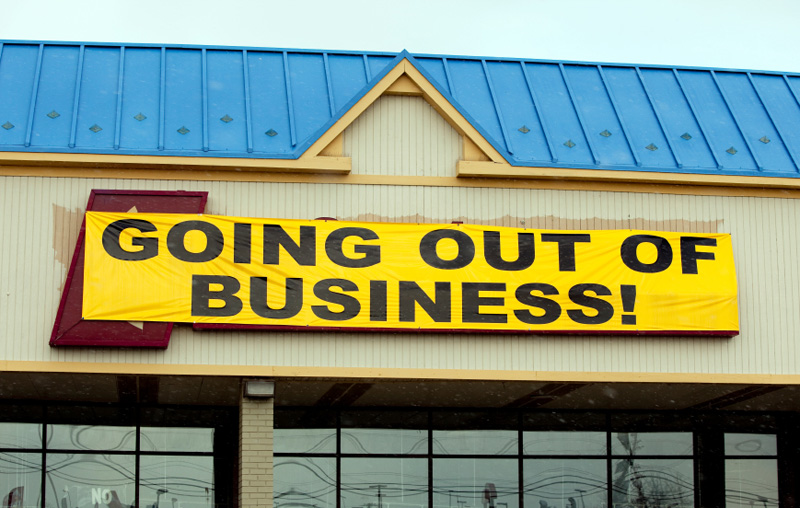
out the doorOf course, business brokers and the burgeoning industry of exit planning professionals (disclosure: I am certified in both) intend to cash in on the wave of sellers by vastly increasing their businesses. Even with a shortage of buyers, I’m sure they can double or triple their number of successful sales. Tripling would reduce the number of unsold businesses to only 485 per day. That’s 20 small companies with employees unsold hourly… 24/7/365. Do the math.

Of course, not all of the companies that change hands sell through business brokers. Some are passed on to families. Many are acquired privately, with accountants or attorneys facilitating the transactions. Others are sold to employees.

For small business owners, the third option, selling to employees, is too often the option of last resort. Owners ask their legal and financial advisors what to do. They prepare their company for sale (for a really solid new book on getting your company ready for a third-party sale check out The Exit Strategy Handbook by Jerry L. Mills). They list the business on the Internet or with a broker.

For any number of reasons, the business doesn’t sell. Perhaps they don’t have enough time because  the owner is burned out or ill. Their return on assets is too low, or their industry outlook is poor. The financial markets are tight, or there are just too many other businesses available for a limited number of buyers.

Finally, in desperation, they “sell” the business to employees for an installment note. In some ways these transactions often resemble the subprime mortgage market. The employees really aren’t qualified to grow the business. They need a job, and the terms can be stretched to any length to fit the cash flow available, so they are willing to sign whatever looks sustainable. If they don’t make the payments, the only recourse is for the owner to take back a company that he doesn’t want, and whose value has declined.

It’s a bad way to get rid of a company, but for many owners it is the only one they have left. It doesn’t have to be that way. We will talk about the alternatives next week.

Picture Credit


Can Franchising Survive The Baby Boomers?

As a consultant to business owners, this is a column I’ve hesitated to write for a long time. There are over 800,000 franchised businesses in the United States, and I’m not going out of my way to make that many owners mad at me. Since I often write and I speak nationally about the trends of Baby Boomer businesses, however, I frequently wonder whether the franchise business model can survive another generation in its current form.

A quick recap of franchising in the USA. “Business Model Franchising” (the sale of a turnkey concept) began in the 1940’s with KFC, A&W and Howard Johnson’s. In 1975 the first Boomers turned 30 years old, and the sale of new franchises grew from about 2,000 to over 20,000 annually in the next five years. Educated and competitive Boomers, squeezed out of Corporate America by their sheer numbers, embraced franchising with enthusiasm.

In turn, franchisors got highly motivated owners, who were willing to work very hard and make personal sacrifices for their piece of the American Dream. Predominantly in service industries, franchising benefitted from an exploding workforce of people who were focused on success.

The franchised restaurateur discovered that he or she could spend more time in the business by outsourcing other service tasks (like cutting the lawn or servicing the ice maker) to another franchisee. That franchisee could focus on building a bigger landscaping business by outsourcing his housekeeping to yet another franchisee.

The impact on our country was huge. Small business owners are productivity machines. They work long hours and weekends. This economic pyramid of highly productive small business owners spending their incomes with other highly productive small business owners has been the underpinning of American economic success for the last 35 years.

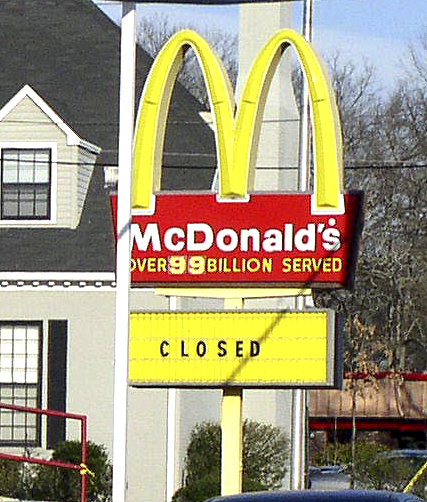
Failed franchiseNow it is coming to an end. The oldest Baby Boomers are turning 68 this year. By 2018 they will be reaching retirement age at a rate of 8,000 a day. From then until 2023, the next generation’s birthrate is half that of the Boomers, and they have considerably less enthusiasm for 65-hour or 6-day work weeks.

In addition, Boomers will consume less. The retired restaurateur starts doing his own gardening. The former landscaper does his own housework. The velocity of money (how many times it changes hands) will also slow as Boomers belatedly save for retirement.

This affects franchises particularly, because they are built on a model that assumes an owner is driving the business. If there aren’t enough owners, the model has to change. Depending on the franchise, it will happen in one of several ways.

  • Franchisors who have the foresight to develop strong manager training programs, along with the financial strength to purchase units from retiring operators, will convert to largely company-owned chains. For them, franchising will have been a developmental model, to be replaced as the first generation of franchisee partners makes its exit.
  • Successful multi-unit operators will grow as they take advantage of acquisition opportunities. Add-on units already have common systems, and family ownership succession is easier in a company with well-defined management structures. As these operators grow to nine-figure revenues and thousands of employees, they will no longer meet any normal definition of a “small” business.
  • Franchisors who remain dependent on a model that requires substantial start-up equity, long hours and hands-on management by an owner must change dramatically or fail. The franchisee they built their business model around is going away.
  • Franchisees with one or two units that they work in personally, and who don’t have children, employees or a franchisor willing to purchase the business, will close. There are simply too few small business buyers with too many alternatives.

All in all, the stereotype of a franchise as a local, mom-and-pop owned business will disappear. You can’t dispute the numbers. There aren’t enough operators  in the pipeline who fit the model of a shirtsleeve owner. Whether run by big multi-unit operators or the parent corporation, franchises will be very different ten years from now.

Picture Credit

Beating the Boomer Bust

We’ve looked at the coming generation of business buyers, and many things about that picture aren’t pretty. When I present to business owners about the Boomer Bust, this is around the time that someone in the audience says “So, are we just screwed?

No. There are things you can do to make your business more transferable, and more appealing to those buyers who will be looking for an opportunity.

First, remember that my generalizations about a generation are just that. Both words derive from the Latin root genus, which meant both “birth” and “type.” A historical comment: it’s interesting that one word meant both things, because it was an era when your birth determined your type, or your role in society for life.

Not every Boomer is a workaholic. I know plenty of slacker Boomers, although none that are successful business owners. I also know plenty of hard-charging X’ers. So the first thing to remember as  Boomer business owner is that Generation X buyers for your business aren’t nonexistent. They are just far fewer than the number of sellers because of their numbers, values and choices.

Second, every business problem is better tackled with planning and preparation. Positioning your business for a successful sale is like putting timers on your lights at home. Any experienced burglar will tell you that he can case a house for a few nights to determine whether there are timed lights, but why should he? There are far more houses that don’t have any precautions at all. Most privately held businesses aren’t planning for transition, and won’t be ready when the time comes.

A third reason not to be depressed is remembering who you are. If you recognize yourself in our profile of the hard-working, driven Boomer business owner we’ve presented here, then your competitive nature should kick in as you think about being one of the winners in the transition.

After all, selling your company is probably the most significant financial event of your lifetime. Why wouldn’t you approach it with all the energy and problem-solving ability that you possess?

Any successful transition of your business is a sale, whether it is to a third party, to employees or to family. We will use sale as a generic term synonymous with succession, transition. merger or acquisition just to keep things simpler. When I am speaking about a specific approach, I will differentiate between an internal sale (to employees or family) and an external sale (to a third party).

I’m also focusing on the transfer of a business from an individual, or a few partners, to another individual or partner group. Many small business owners approach me looking for a third party sale to a “strategic buyer.” All they know is that they’ve heard a strategic buyer pays far higher multiples than other buyers, so that’s the kind of buyer they want.

Very few companies selling for less than $10,000,000 are sold to strategic buyers. It is more frequent in technology and in some distribution channels than in other industries, but it isn’t common at all. If you are a typical small business providing services on a local basis, a franchisee, a retailer, or a professional firm; there is little likelihood that you offer the kind of strategic differentiation required to attract a large (and wealthy) corporation to your door.

Understanding your prospective buyer is a key part of the selling process, but it isn’t the only part. before we discuss how to position for the next generation(s) of buyers, we have to step aside to talk about where you begin.

The Starting Point

Preparing for a successful sale to a typical small business buyer begins with an honest assessment of where you are today. What is your company really worth?

Most business owners have a very subjective approach to valuing their business. They talk to colleagues at trade shows about rumored prices for sales in their industry. They ask other business owners in their local area about the sale prices of unrelated companies. They read stories in the news about publicly traded acquisitions. Then they pick the number they like the best. “After all,” they say, “my business is as good as anyone else’s.”

I see too many cases where owners become emotionally committed to that number, to the point where they are highly offended by any other. They tell their personal financial planner to use the number in their retirement planning. They put the number on their personal financial statements to the bank. After a while, that number becomes fact, whether it originally had any basis or not.

Your planner or your banker isn’t qualified to verify the value you place on your business. For many owners whose net worth is 50% or more dependent on their business asset, picking a number based on hearsay or second-hand information is tantamount to insanity. It is your biggest asset, don’t you want to know what it worth?

There are a number of valuation specialists who can appraise your company. Any qualified professional will look at comparative sales, the market, your industry and the current  cost of financing.For most small businesses, a reasonable appraisal can be purchased for a few thousand dollars. (A side note: “free” appraisals or those generated in one-day seminars are often worth what you paid for them.) Once you have it, you can use the logic and multiples to track your approximate value for at least several years.

The Target

Once you know what your business is worth, targeting becomes much simpler. You take your net worth today (without your business), determine what you will need at retirement, and the sale price of your company has to make up the difference. A Certified Financial Planner has the ability to help you project your retirement needs, as well as the software to calculate tax implications and inflation.

With the company’s real present value documented, and a target amount based on realities of the market, you can set a date for your exit.

Setting a date is much, much more than just a theoretical exercise. Every plan must start with a goal, and your goal has to be both time and amount sensitive. “I’ll keep working until my business is worth $5,000,000.” isn’t a plan. “I’ll quit when I am 65 years old, and just hope that I have enough to live on.” isn’t a plan.

Setting your exit date doesn’t mean you have to stop working. It doesn’t even mean you have to leave your business. It’s just the target for when you can leave your business. Once you are there, the actual timing is up to you.

If you have a plan, you can start positioning for the sale. That’s where understanding your buyers’ market begins.

(This is the eighth installment in a series about “Beating the Boomer Bust.” Previous installments are The Approaching Tidal Wave, The Pig in the Python,  The Brass RingWork-Life Balance, Outsourcing America The X Factor and The Gen X Business Buyer.)

Outsourcing America

The Baby Boomers created seismic shifts in American culture and economics throughout their lives. Their mere numbers caused much of the shift, but their competitiveness and commonality enhanced the impact at every stage of their lives.

In the mid 1960’s, as we’ve seen, the Boomers delayed having children. Unlike every previous generation, they chose to work longer and accumulate, or at least spend more, wealth. The “trough” of birthrates was lowest between about 1968 and 1978. By the early 1980’s, the Boomers began their delayed child-bearing in earnest.

As the parents of Generation X, the Boomers didn’t suddenly abandon their defining characteristics. They became competitive parents. Parenting became a performing art. Peer pressure made competitive parenting into a status symbol. They set out on the quest for ultimate child development.

The Boomers had two ways possible to approach perfect parenting. The first way requires a huge commitment of time. Mom stays home, and Dad is home as much as humanly possible. You pour your time into giving attention to your children. You engage them in all household activities, such as gardening and cooking. You do their homework with them, and teach them how to play sports. You practice with them, and dedicate evenings and weekends to their development.

That road to perfect parenting doesn’t leave much space for dual career households seeking the upper reaches of the socio-economic ladder. You can’t work lots of overtime, bring work home, play golf with customers on weekends, or go out for career-enhancing social events if you are spending every spare minute delivering instruction and experience to your children.

As a smart, educated, and efficient parent the solution is obvious. You outsource all that stuff. Outsourcing traditional parenting chores served a dual purpose. It saved time for Boomer parents who were focused on career-building, and it created business opportunities for those who couldn’t, or wouldn’t, compete in  climbing the traditional career ladder of corporate America.

Business model franchising was first established in the 1940’s, beginning with businesses that offered prepared food to replace home-made meals. From 1975 (when the first Boomers turned 30) through 1986 the number of franchises sold in the US skyrocketed from about 2,000 to 22,000 annually. That number leveled off in 1986, and remains roughly constant through today.

Competitive Boomer parents had an answer to their time constraints; one that still suited the drive to give their children the best of everything. Little League became merely the first step in sports development. If you were serious about supporting your child’s sporting prowess, you paid for year-round leagues, traveling teams and private coaches. The same logic justified martial arts classes, music teachers and tutors for school subjects.

At home, busy parent could “buy” time by outsourcing not only cooking, but house cleaning, laundry, yard maintenance and repairs. “Do it yourself” faded as a point of pride, replaced by hiring an expert to do it better.

The explosion of franchising was fueled by the rising tide of Boomers serving Boomers. They provided both the service providers and the consumers who paid for those services. By the 1980’s, the portion of the US Gross Domestic Product from services had risen to over 70%.

For franchisors and their franchisees, the model fit Boomer ambitions beautifully. Once established, franchisors had a ready market of hard-working ownership prospects. Many, and probably most franchises are driven by the personal efforts of the franchisee. He or she often opens the business, closes it, and delivers or supervises the delivery of most of the services.

Franchisors are relieved of the expensive, time-consuming roles of motivating employees and managing the day-to-day operations. They don’t need to set sales goals or create growth incentives; Boomer owners do that all by themselves.

What happens when franchisors run out of middle-aged Boomers to buy and drive their growth? The youngest Boomers are now entering their 50s, and are no longer prime candidates for start-up ventures. The oldest Boomers are rapidly (at a rate of 1,000 every 8 minutes) moving out of their peak outsourcing consumption years.

On August 6, 2011, Standard and Poors Sovereign Credit Rating Unit downgraded America’s debt rating from AAA to AA+. The next day the head of the unit, David T. Beers, was asked in an interview to estimate when the top rating might be restored. He replied, “What Americans have to understand is that this country reached its demographic peak ten years ago.

“Awake at 2 o’clock is a weekly column for business owners. This series has been examining the impact of the Baby Boom generation on cultural shifts and the economy of the United States, in order to build the base for the rest of the discussion to come.

What will happen to the millions of Boomer-owned businesses when it is time to hand them off to a generation that is smaller, has very different values, and has far more options? Our next column will begin examining those buyers- Generation X.

(This is the fifth installment in a series about “Beating the Boomer Bust.” Previous installments are The Approaching Tidal Wave, The Pig in the Python,  The Brass Ring and Work-Life Balance.)


Work-Life Balance

The term “Work-Life Balance” is widely cited as first occurring in the United State in 1986 in a research paper. I can’t identify the specific source of this much-referred usage, but it is telling that it would pop up when the last Baby Boomers had just turned 21. They were all in the labor pool, and their competitiveness (see The Brass Ring) was rapidly becoming the norm in the workplace.

In the period beginning in 1912, the Federal Government began passing legislation to limit the number of hours that could be demanded of a worker. With the passage of the Fair Labor Standards Act of 1938, the concept of a 40 hour work week was enshrined in national labor regulations.

In the decades following WWII, the average work week hovered between 39 and 41 hours. As the Boomers assumed their dominant role in the workforce, however, it began to climb for the first time since prior to the Great Depression, and by the mid 1990’s was in excess of 47 hours a week for the entire working population. The race was on!

Just as it doesn’t take an economist to understand why a having lot more people creates additional demand, so it doesn’t take a PhD to explain why working more produces more. Combine a generation that was 50% larger than its predecessor, and have that much larger labor force work 20% more, and you have a rising tide that has carried the US economy through today.

But even those factors don’t fully explain the force that was the Baby Boomers. Driven to succeed, they sought new ways to increase household income. One of those became obvious. As the university system opened up to women, educated and ambitious Boomer moms were pressed into service as wage earners. The two income family became the new norm.

Between 1970 and 1980, while the US population increased by 11%, the workforce grew by an astonishing 29%!

“Work-Life Balance” wasn’t a term before the Boomers, simply because it wasn’t a widespread issue before the Boomers. The returning WWII GIs didn’t wrestle with the dividing line between work and life. There was work, and then there was life. You left the office at 5:00 (or the plant when your shift ended) and came home to your life. In the idealized middle-class family, Mom had spent the day caring for the children and preparing dinner. Weekends were for outings and backyard time with friends (in your new subdivision home).

Boomers abandoned that model by the millions. Although the wife still assumed the bulk of the duties of child care and food preparation (and does today), she had to fit it in around a work week spent supporting a lifestyle of success.

In 1984 (when the Boomers ranged from 20-40 years old- prime child-bearing time) Chrysler Corporation introduced one of the greatest product successes of the decade; the minivan. Built on a car chassis (so women could drive it more easily) it had the first feature that acknowledged automobiles as something other than transportation- cupholders!

Now families had transport that accommodated their need to feed children in between school and activities and home. McDonald’s installed its first drive-through window in 1975 (the oldest Boomers had just turned 30). Mom became an efficiency machine, going from work to school to soccer without ever getting out from behind the steering wheel.

In a foreshadowing of what happened to many products that depended on Boomers to support them, over 1 million minivans were sold in America in 2005, when the youngest Boomers turned 40. By 2008, just three years later, minivan sales had dropped by 80%, to just over 200,000. The Boomers were now in their 40s and 50s. More affluent, they could afford to move up en masse to SUVs. (Everyone had cupholders by then.)

The Boomers had reshaped society, first as children, again as working adults, and now as parents. This reshaping went much further that simple productivity. In their quest for identity through work and material success, the Boomers were about to engineer the biggest change of all.

Since 1776, with a small drop during the Great Depression, every generation of Americans has begun promptly producing a new, larger generation upon turning 20 years old. The Boomers broke that mold. Their need for higher education and early focus on potential careers delayed their marriages and child-bearing by years. Once they began having children, the challenges of juggling job and family, along with medical advancements in birth control, led them to have fewer children than their parents did.

As a result, the tenth generation born as United States citizens (known by their Roman numeral as “Generation X”)  was smaller than the Boomers that preceded them by almost 10,000,000 lives.

By now, you have had enough indoctrination regarding the economic effects of rising and falling populations to understand the implications of a shrinking work force. It is no coincidence that the suffering economies of Europe, Greece, Italy, Spain and Portugal, have had the four lowest birth rates in Europe for the last 30 years. Fewer workers are simply bad for an economy.

But Generation X will impact retiring Boomers through more than just numbers. They grew up in minivans, watching their parents work longer and harder in pursuit of success. They aren’t impressed by the results, and are returning to values that separate work from life.

That may be good for them, but it isn’t promising for Boomer business owners on many different levels.

(This is the fourth installment in a series about “Beating the Boomer Bust.” Previous installments are The Approaching Tidal Wave, The Pig in the Python and The Brass Ring.)